

Where to Buy Authentic Moroccan Pottery Online: The Complete Guide
Moroccan pottery is one of the most beautiful and sought-after crafts in the world. The rich cobalt blues of Fes, the earthy greens of Tamegroute, the vivid polychrome glazes of Safi, each piece carries a story shaped by centuries of tradition. But as demand has grown, so has the flood of imitations. Mass-produced “Moroccan-style” ceramics have made it harder than ever to find the real thing, whether you are shopping online or walking the medina yourself.
This guide will show you exactly where to buy authentic Moroccan pottery, what separates genuine handmade ceramics from cheap copies, and why, if you truly want the real thing, there is no better source than Fes itself.
What Makes Moroccan Pottery Authentic?
Before you know where to buy, you need to know what you are actually looking for.
Authentic Moroccan pottery is entirely handmade, from the shaping of the clay on a traditional wheel to the hand-painting of every motif. No two pieces are identical. That is not a flaw, it is the proof.
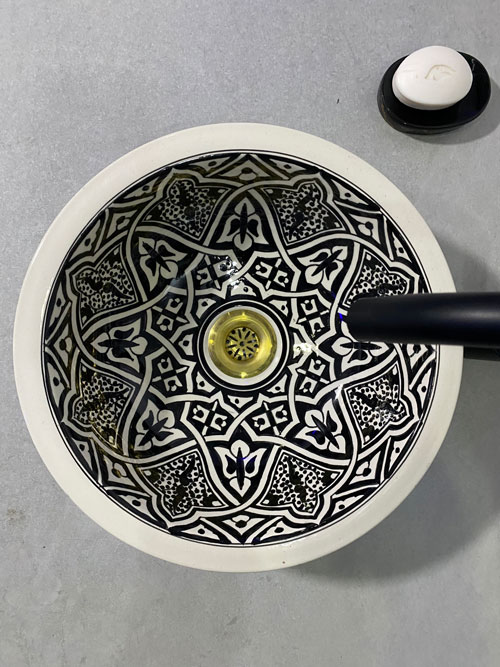
The three signs of genuine handmade ceramics
1. Visible imperfections
Real Moroccan ceramics carry the mark of human hands. You will notice slight asymmetry in the shape, minor variations in brushstroke thickness, and small irregularities in the glaze. Machine-made pieces are too perfect, and that perfection is the tell. As one authentication guide puts it, genuine pottery has subtle differences in gloss and sometimes minor surface variations known as “crazing,” which are not defects but markers that the item was fired in a traditional kiln using age-old techniques.
2. Weight and sound
Pick up an authentic piece. It should feel substantial, dense clay fired at high temperature has real weight to it. Tap it gently with your knuckle. A genuine piece will ring with a clear, bell-like tone. A hollow or dull thud suggests low-quality firing or mass-produced material.
3. Artisan marks on the base
Turn the piece over. Traditional Moroccan potters often sign the base of their work or press the mark of their workshop into the clay before firing. This is a stamp of pride, not just a label. If the base is completely blank and machine-smooth, be cautious.
The Three Moroccan Pottery Capitals — and What Each Produces
Morocco is not one single pottery tradition. It is a family of regional styles, each shaped by local clay, local history, and centuries of unbroken craft lineage. Knowing the difference helps you buy with intention.
Fes — The Cobalt Blue Capital
Fes is Morocco’s oldest pottery capital and the origin of what collectors call Fassi blue, the iconic cobalt blue and white palette that has defined the city’s ceramics since the 12th century. Fes pottery is double-fired: raw clay is shaped and fired first, then coated with a white tin-oxide glaze, hand-painted with cobalt oxide pigment, and fired a second time. The result is deeply lustrous, refined, and unmistakably Fassi.
Fes is also the home of zellige, the hand-cut mosaic tilework that has been one of the biggest interior design trends globally in 2025 and 2026. The city’s pottery quarter, still operating with techniques unchanged for hundreds of years, is where master artisans teach apprentices the same methods passed down through generations.
If you want the most classical, collectible, and historically significant Moroccan ceramics, Fes is the only answer.
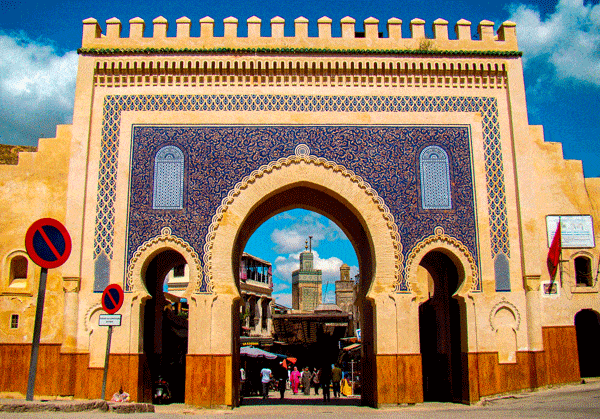
Safi — The Color Capital
Safi, a coastal city south of Casablanca, is known for its vivid polychrome ceramics, yellows, reds, turquoise, and bold geometric patterns. Safi pottery is more exuberant and playful than the formal elegance of Fes. It is excellent for brightening a kitchen, adding color to a dining table, or embracing a boho-inspired aesthetic.
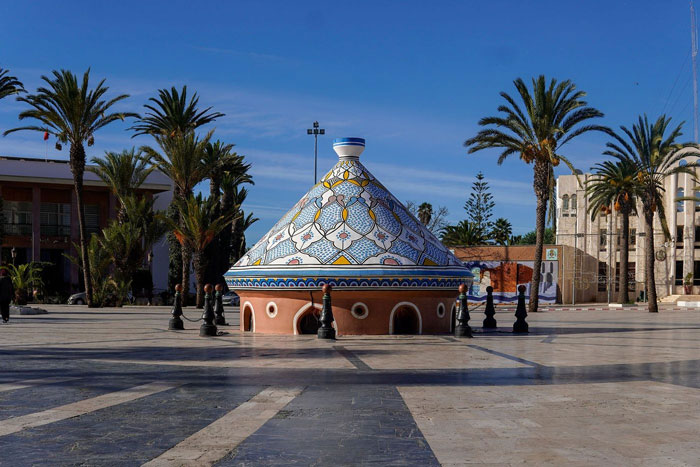
Tamegroute — The Green Glaze Village
In the Saharan south, the small village of Tamegroute produces perhaps the most distinctive pottery in Morocco: thick, rustic pieces glazed in deep bottle green or ochre. The look is organic and almost sculptural, wabi-sabi before the term existed. Tamegroute ceramics are perfect for minimalist, earthy, or Mediterranean interiors.
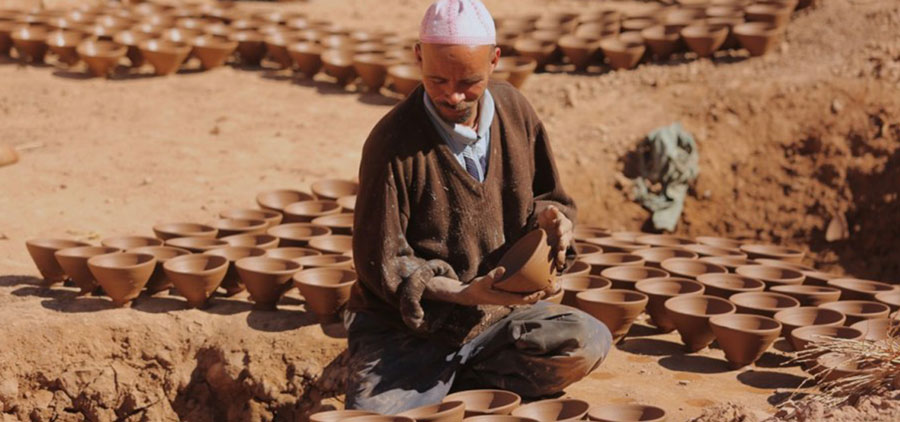
Discover Authentic Fes Pottery Crafted by Master Artisans
Fes Pottery Art is a Fes-based workshop and gallery celebrating the living traditions of Moroccan ceramics. We offer hands-on pottery and zellige workshops in the heart of the medina, and ship authentic handmade pieces worldwide.
Where to Buy Authentic Moroccan Pottery Online
Finding genuinely handmade Moroccan pottery online is possible, but it requires knowing where to look. Here are the most reliable sources.
1. Buy Directly from Moroccan Artisan Workshops
The most authentic source is always the artisan themselves. A number of workshops in Fes and across Morocco now ship internationally, allowing you to buy directly from the hands that made the piece. When you buy from a workshop, rather than a reseller, you know exactly who made your piece, how it was made, and that your money goes directly to supporting Moroccan craft traditions.
At Fes Pottery Art, our artisans hand-paint every piece in our Fes medina workshop using traditional Fassi techniques. We ship worldwide, and every piece comes with the story of the artisan who created it. Browse our shop →
2. Reputable Online Moroccan Craft Stores
Several online shops specialize in curating authentic Moroccan ceramics sourced directly from artisan families. Look for stores that:
- Name the city or region of origin for each piece
- Show the artisan or workshop behind the product
- Photograph imperfections honestly rather than hiding them
- Offer genuine customer reviews mentioning authenticity
3. Etsy — With Caution
Etsy has a large selection of Moroccan pottery, and some sellers are genuinely Moroccan artisans shipping directly from their workshops. However, the platform also has many resellers who source cheap imitations. On Etsy, always check: Is the seller based in Morocco? Do product photos show real handmade variation? Are reviews from customers who received pieces that matched the description?
4. In-Person, From the Source
Nothing replaces buying from the artisan’s own hands, watching them work, understanding their process, and choosing your piece yourself. If you are planning a trip to Morocco, a pottery workshop in Fes is an experience that transforms how you see every piece you own afterwards.
Red Flags: How to Spot Fake Moroccan Pottery
Whether shopping online or in a souk, these warning signs mean you should walk away.
Too perfect to be real
If every plate in a set looks completely identical, same brushstroke, same line weight, same glaze pooling, it was not painted by hand. Authentic pieces always show the slight variation that comes from a human artist.
Suspiciously lightweight
Mass-produced ceramics are often made with inferior clay fired at lower temperatures. They feel light and thin compared to genuine Moroccan pottery, which has a satisfying density.
No origin information
A reputable seller should be able to tell you where the piece was made, the city, the workshop, even the artisan’s name. Vague answers like “handmade in Morocco” with no further detail are a warning sign.
Prices that seem too good
Genuine handmade Moroccan ceramics take skilled artisans significant time to produce. A hand-painted plate from Fes that costs less than a mass-produced item from a home goods chain is almost certainly not what it claims to be.
Machine-perfect bases
A completely smooth, featureless base with no artisan mark, no slight irregularity from hand-shaping, and no signs of traditional kiln firing is a strong indicator of industrial production.
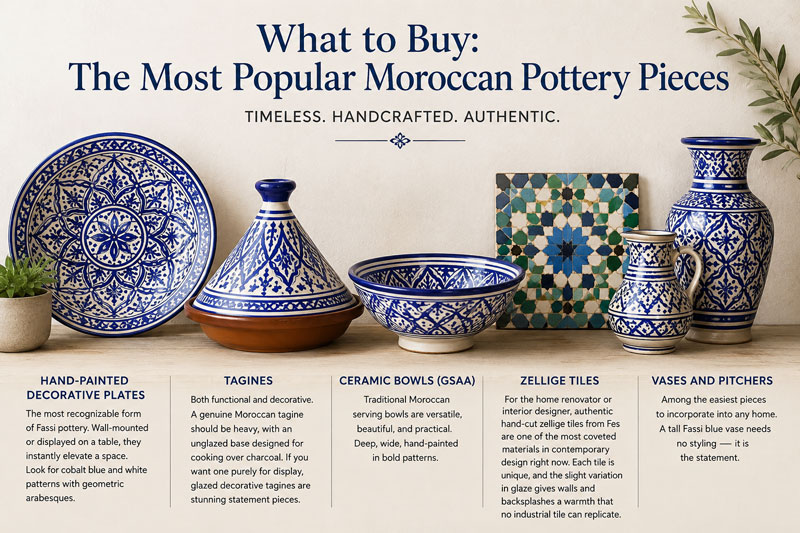
What to Buy: The Most Popular Moroccan Pottery Pieces
Not sure where to start? These are the pieces most loved by collectors and interior designers.
Hand-painted decorative plates, The most recognizable form of Fassi pottery. Wall-mounted or displayed on a table, they instantly elevate a space. Look for cobalt blue and white patterns with geometric arabesques.
Tagines:
Both functional and decorative. A genuine Moroccan tagine should be heavy, with an unglazed base designed for cooking over charcoal. If you want one purely for display, glazed decorative tagines are stunning statement pieces.
Ceramic bowls (gsaa):
Traditional Moroccan serving bowls are versatile, beautiful, and practical. Deep, wide, hand-painted in bold patterns.
Zellige tiles:
For the home renovator or interior designer, authentic hand-cut zellige tiles from Fes are one of the most coveted materials in contemporary design right now. Each tile is unique, and the slight variation in glaze gives walls and backsplashes a warmth that no industrial tile can replicate.
Vases and pitchers:
Among the easiest pieces to incorporate into any home. A tall Fassi blue vase needs no styling — it is the statement.
How to Care for Authentic Moroccan Pottery
Genuine handmade ceramics deserve proper care.
- Hand wash only. Dishwashers damage traditional glazes over time. Warm water and a soft cloth is all you need.
- Avoid sudden temperature changes. Never move a ceramic piece directly from the refrigerator to a hot surface or vice versa.
- For cooking tagines: Always season your tagine before the first use by soaking the base in water for 24 hours and then cooking a low-heat meal the first time. This prevents cracking.
- Food safety: Traditional Moroccan pottery uses natural lead-free glazes in reputable workshops. Always confirm with your seller that the piece is food-safe before using it for serving or cooking.
- Display with intention. Authentic Moroccan ceramics are beautiful objects. Give them space to breathe, a single statement plate on a wall or a cluster of three mismatched bowls on a shelf is more powerful than a crowded display.
Why Buying Directly from Fes Matters
Fes is not just Morocco’s pottery capital, it is one of the oldest continuously inhabited medinas in the world, a UNESCO World Heritage site, and the city where the traditions behind every piece of authentic Moroccan ceramics were born and preserved.
When you buy pottery from a Fes workshop, you are not just purchasing an object. You are participating in a living tradition that stretches back over a thousand years, supporting artisan families who have devoted their lives to this craft, and bringing home something that carries genuine meaning.
At Fes Pottery Art, every piece in our workshop and shop is made by Fes artisans, many of them women from the medina, using techniques unchanged for centuries. We offer workshops where you can learn the craft yourself, and we ship finished pieces worldwide.
Whether you want to take home a single hand-painted bowl or experience the full process of throwing clay on a traditional wheel, we would love to welcome you.
Frequently Asked Questions
Is Moroccan pottery food safe?
Authentic Moroccan pottery from reputable workshops uses natural lead-free glazes and is fired at temperatures that make it food safe. However, cheaper mass-produced imitations may use harmful glazes. Always ask your seller to confirm food safety before using a piece for cooking or serving.
Can I buy Moroccan pottery without visiting Morocco?
Yes. Many Moroccan artisan workshops now ship internationally. Buying directly from a workshop in Fes or a trusted Moroccan artisan shop is the best way to guarantee authenticity when you cannot visit in person.
What is the difference between Fes pottery and Safi pottery?
Fes pottery (Fassi ceramics) is characterized by refined cobalt blue and white patterns with geometric and arabesque motifs, elegant, classical, and collectible. Safi pottery uses a bolder, more colorful palette with reds, yellows, and turquoise. Both are genuinely handmade; the difference is in the regional style and aesthetic.
How do I know if Moroccan pottery is genuinely handmade?
Look for slight variations in pattern, asymmetry in shape, uneven glaze pooling, and an artisan mark on the base. Authentic pieces feel heavy and ring with a clear tone when tapped. Machine-made pieces are too uniform and feel lighter.
What is zellige?
Zellige (also spelled zellij) are hand-cut mosaic tiles originating from Fes, Morocco, dating back to the 10th century. Each tile is individually shaped, glazed, and fired, no two are identical. Zellige is one of the most sought-after materials in interior design right now, used for kitchen backsplashes, bathrooms, fountains, and accent walls.
How much does authentic Moroccan pottery cost?
Prices vary widely. A small hand-painted bowl from a Fes workshop might start around $15–30. A large decorative tagine or statement vase can range from $60–150 or more. Zellige tiles are priced per square meter, typically starting around $80–120/m². If you see prices significantly below these ranges, question the authenticity.