

Is Moroccan Pottery Food Safe? Everything You Need to Know Before Buying
It is one of the most common questions asked by travelers returning from Morocco, and by buyers shopping for authentic ceramics online: Is Moroccan pottery food safe?
The short answer is: it depends entirely on where you bought it and how it was made.
The longer answer, the one that actually protects you and your family, is what this guide is for. We will walk you through the real concern behind the question (lead glazes), how to tell a food-safe piece from one that is not, what questions to ask any seller, and how to test pottery you already own at home.
By the end, you will know exactly what to look for, what to avoid, and how to enjoy Moroccan ceramics with complete confidence.
Why the Question of Food Safety Comes Up with Moroccan Pottery
Moroccan ceramics are beautiful. The cobalt blues of Fes, the vivid polychrome glazes of Safi, the earthy green of Tamegroute, these are not decorative accidents. They are the result of centuries of artisanal tradition, using metal-oxide pigments that produce the rich, deep colors that make Moroccan pottery recognizable worldwide.
And here is where the concern comes from: some metal oxides used historically in ceramic glazes, particularly lead oxide, are toxic. Lead-based glazes were once used widely in pottery traditions globally, including in Morocco, because they produced a smooth, glossy, highly attractive finish at relatively low firing temperatures. But lead leaches. When an acidic food or drink, tomato sauce, lemon juice, vinegar, wine, coffee, comes into contact with a lead-glazed surface, lead can migrate into the food.
The health risks of lead exposure are serious, particularly for children and pregnant women. It accumulates in the body, affecting the nervous system, kidneys, and development.
So the question is not whether Moroccan pottery can be food safe. It absolutely can. The question is whether the specific piece you are buying or already own was made with safe, food-grade materials and properly fired. That is a question of who made it, how, and where.
The Key Distinction: Authentic Workshop Pottery vs. Mass-Market Imitations
There is a critical difference between two types of “Moroccan pottery” available in the market today.
1. Genuine Artisan-Made Ceramics from Moroccan Workshops
Reputable Moroccan pottery workshops, especially in Fes, the country’s oldest and most respected pottery capital, have modernized their practices in response to international export standards. Modern artisan workshops use natural, lead-free mineral pigments (cobalt oxide for blue, copper oxide for green, iron oxide for red and brown) and fire their pieces at high temperatures in proper kilns.
The high-temperature firing is what matters most. When pottery is fired correctly at high temperatures, the glaze vitrifies, it fuses into a glass-like layer that seals the surface and prevents leaching. A properly fired piece from a reputable Fes workshop is not only safe for food use, it is also designed for it.
In Fes, the traditional clay preparation process is rigorous. The grey clay native to the region is soaked in water, kneaded by foot, then by hand, and only worked once it reaches the perfect pliability, a process that has remained unchanged for centuries. The mineral composition of this clay allows for high-temperature firing that produces exceptionally durable, dense, non-porous ceramics.
2. Mass-Produced or Unverified Imports
The wider concern, and the reason health authorities have flagged Moroccan ceramics alongside ceramics from other countries, is the proliferation of cheap, mass-produced pieces sold in tourist markets and on online platforms that mimic the look of authentic Moroccan pottery but cut corners on materials and firing.
The New York City Department of Health explicitly lists Morocco among countries whose traditional or handmade ceramic ware may contain high levels of lead, along with China, India, Mexico, and others. The concern is not with reputable artisan production, it is with unregulated, low-cost ceramics fired at insufficient temperatures with unverified glaze materials.
This is why the question “is Moroccan pottery food safe?” does not have a single yes or no answer. It depends entirely on which Moroccan pottery you are talking about.
How to Know If a Specific Piece Is Food Safe
Whether you are about to buy or already own a piece, here are the factors that determine food safety.
1. Ask Directly — and Look for Specific Answers
Before purchasing, ask the seller or workshop: Is this piece food-safe and lead-free?
A reputable workshop will answer this directly and with confidence. They will be able to tell you what glazes they use, how the piece was fired, and whether it meets international food safety standards.
A vague or evasive answer, “it’s traditional,” “all our pieces are natural,” or simple silence, is a warning sign. Ask specifically about lead, and about whether the piece has been tested or certified.
2. Look for the “Decorative Only” Label
Any piece honestly marketed as decorative only will carry a label or description indicating it is not for food use. If you see “not for food use” or “decorative only,” respect that guidance. It exists because the seller cannot guarantee the glaze materials are safe for food contact.
Conversely, pieces sold explicitly as serving bowls, plates, tagines, or mugs from reputable workshops should be food-safe by design, that is their function.
3. Check the Glaze Quality and Firing
Well-fired pottery has a smooth, vitrified glaze surface that does not feel powdery, chalky, or rough when you run a wet finger across it. If the glaze feels uneven, grainy, or shows signs of poor adhesion, the firing temperature may have been insufficient, and insufficient firing means the glaze did not fully harden and may leach.
Be especially cautious with bright orange, red, and yellow glazes, these colors have historically required pigments that are more likely to contain lead or cadmium. This does not mean all red or orange ceramics are unsafe, but they warrant extra scrutiny and direct confirmation from the seller.
4. Vintage and Antique Moroccan Pottery
If you own older Moroccan ceramics, pieces brought back from a trip decades ago, inherited items, or antiques, the safety question is more serious. Export regulations and artisan practices have improved significantly in recent years, but older pieces were more likely to have been fired with traditional glazes that may have included lead compounds.
For vintage or antique Moroccan pottery, the safest approach is to use them for display only, or to test them before any food use (see the testing section below).
5. Where Did You Buy It?
The origin of purchase matters.
- Direct from a reputable workshop in Fes or Safi → Highest confidence in food safety
- From a certified artisan cooperative or fair-trade shop → High confidence
- From a specialist Moroccan ceramics retailer online who names the workshop and artisan → Good confidence
- From a tourist souk, flea market, or street vendor without clear provenance → Uncertain — ask or test
- From a budget marketplace with no origin information → High caution — test or avoid for food use
Discover Authentic Fes Pottery Crafted by Master Artisans
Fes Pottery Art is a Fes-based workshop and gallery celebrating the living traditions of Moroccan ceramics. We offer hands-on pottery and zellige workshops in the heart of the medina, and ship authentic handmade pieces worldwide.
The Difference Between “Lead-Free” and “Food-Safe”
These two terms are often used interchangeably but they are not the same thing.
Lead-free means the materials used contain no added lead. Food-safe is a broader standard: the finished, fired piece, tested as a whole, does not leach harmful levels of any heavy metal (including lead, cadmium, and others) when it comes into contact with food or acidic liquids.
The US Food and Drug Administration (FDA) classifies pottery as food-safe based on leach testing of the finished piece, not just the raw materials. Even if a glaze contained trace lead before firing, a piece can still be classified as food-safe if it meets FDA leach tolerance standards after firing.
In practice, this means: a piece made with entirely lead-free raw materials is very likely food-safe; a piece described only as “traditional” with no further information should be tested before use.
How to Test Moroccan Pottery for Lead at Home
If you already own Moroccan ceramics and are unsure of their origin or safety, you can test them at home using a lead test kit.
What You Need
EPA-recognized home lead test swabs, available at hardware stores and online. Popular brands include:
- 3M LeadCheck™: widely available, fast results
- D-Lead® swabs: recognized by EPA for lead in paint and ceramics
- Lead Inspector kits: designed for multiple surfaces, including ceramics
These kits cost $3–$10 per test and deliver results in under five minutes.
How to Test
- Clean the piece thoroughly with mild soap and water, then dry it completely.
- Activate the swab according to the kit instructions, typically snapping an inner capsule to release the testing agent.
- Rub the swab firmly across the glazed interior surface (the surface that would contact food) for 30 seconds. For the most accurate result, focus on any chipped or crazed areas where leaching is most likely.
- Read the result. If the swab turns pink or red, lead is present at detectable levels. If there is no color change, lead was not detected. Always test the control dot provided in the kit to verify the swab is active.
Important Limitations
Home swab tests are a useful screening tool, but they detect leachable surface lead, not embedded lead in the clay body. They also give a yes/no result, not a precise measurement.
If you need a definitive answer (for example, if you have young children, are pregnant, or want to use a piece regularly for cooking), send it to a certified laboratory for XRF (X-Ray Fluorescence) testing. This gives exact lead and cadmium levels and is the same method used by regulatory authorities.
Which Moroccan Pottery Styles Are Safest?
Understanding the regional styles can help you buy with more confidence.
Fes Pottery — Generally the Safest Bet
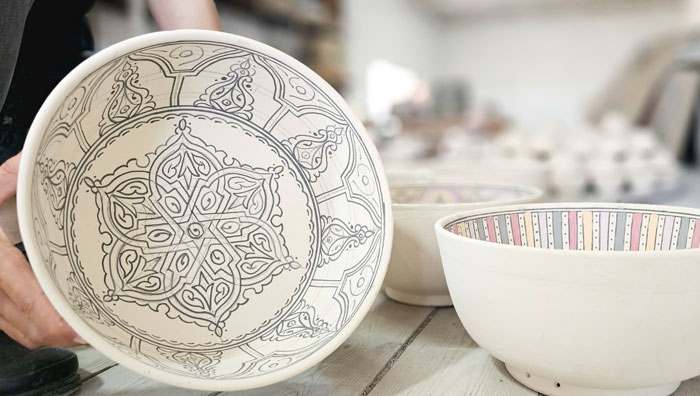
Fes is Morocco’s most internationally traded pottery city, and its workshops have adapted to meet European and US export safety requirements. The classic Fassi blue and white ceramics, double-fired, white tin-oxide glaze base with cobalt oxide decorations, are produced by workshops that understand food safety standards because they have been exporting for generations.
Fes pottery is also notably scratch-resistant due to its dense clay body and high-temperature firing, a quality that actually contributes to food safety, as a harder glaze surface is less likely to leach.
Safi Pottery — Check the Colors
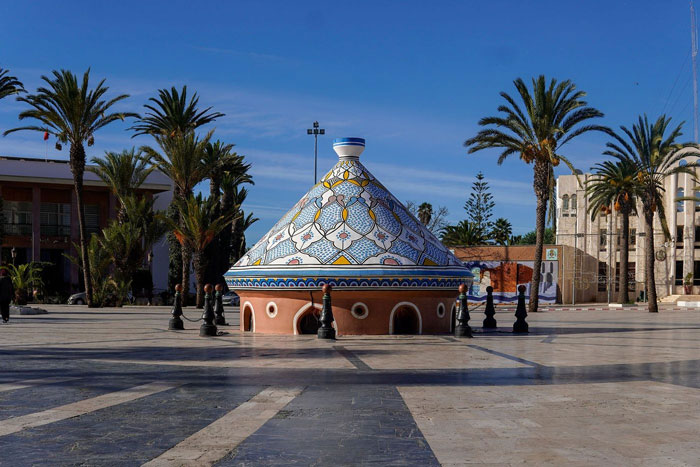
Safi ceramics are beautiful and vibrant, but the wider color palette (which includes reds, yellows, and oranges) means more variability in the pigments used. Most established Safi workshops use safe, fired mineral oxides, but the more vivid colors warrant specific confirmation.
Tamegroute Pottery — Generally Unglazed for Cooking
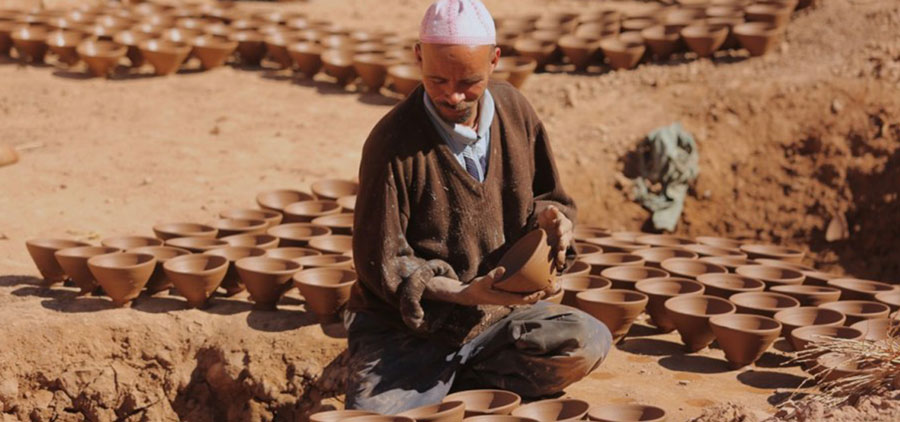
Tamegroute’s distinctive green-glazed pieces are often thick and rustic. Many Tamegroute pieces used for cooking are unglazed on the interior, which eliminates the glaze safety question entirely for the food contact surface. The green exterior glaze is decorative. This makes Tamegroute cooking vessels among the least concerning from a food safety perspective.
Cooking Tagines vs. Decorative Tagines
This is a distinction worth knowing: a cooking tagine is designed to be used over heat, has an unglazed or minimally glazed base, and is made from thick, heat-resistant clay. A decorative tagine is glazed inside and out for visual impact and is not designed for heat or direct food contact.
If you are buying a tagine to cook with, confirm it is an unglazed cooking tagine and season it properly before first use (soak the base in water for 24 hours, then cook a low-heat dish the first time). If you are buying it to display or serve from at the table, confirm the interior glaze is food-safe and lead-free.
Practical Rules for Safe Use of Moroccan Ceramics
Even with verified food-safe pottery, these habits protect you long-term.
Hand wash only. Repeated dishwasher cycles erode glaze over time. A worn or compromised glaze surface is more likely to leach, even on a piece that tested safe when new. Warm water and mild soap are all you need.
Never use chipped or cracked pieces for food. The integrity of the fired glaze surface is what creates the food-safe barrier. Once that surface is breached, even a formerly safe piece becomes a concern. Display chipped ceramics instead.
Avoid prolonged contact with acidic foods. Coffee, tomato sauce, lemon, vinegar, and wine accelerate any leaching that may occur. For regular use with acidic foods and drinks, make sure your pieces are explicitly confirmed food-safe.
Do not microwave. The clay used in traditional Moroccan pottery contains minerals that heat unevenly in microwave radiation, which can cause cracking. Even food-safe ceramics should not be microwaved unless explicitly stated by the maker.
Store properly. Do not stack heavy items on top of glazed pieces. The friction can micro-chip glaze surfaces over time.
Why We Guarantee Food Safety at Fes Pottery Art
At Fes Pottery Art, every piece that leaves our workshop in the Fes medina is made to be used, not just admired. Our artisans use natural, lead-free mineral pigments, and our ceramics are double-fired at high temperatures to ensure the glaze fully vitrifies and produces a durable, food-safe surface.
When you buy from us, you can ask us directly about any piece in our shop. We know how every item was made because we made it, in our workshop, by our artisans, following traditions that have produced functional, food-safe ceramics in Fes for over a thousand years.
Frequently Asked Questions
Is Moroccan pottery safe for everyday use?
Yes, if it comes from a reputable workshop that uses lead-free glazes and fires pieces at proper temperatures. Always confirm food safety directly with your seller before using any ceramic piece for eating, cooking, or drinking.
Can I use Moroccan pottery in the microwave?
Generally, no. Traditional Moroccan clay contains minerals that heat unevenly in a microwave and can cause the piece to crack. Unless your piece is specifically labeled microwave-safe by the maker, keep it off the microwave.
Is a Moroccan tagine safe to cook in?
An unglazed cooking tagine from a reputable source is safe for cooking. Season it properly before the first use (soak in water for 24 hours, then cook a simple dish at low heat). Decorative tagines with glazed interiors should only be used for serving, not cooking, unless the interior glaze is explicitly confirmed food-safe.
How do I test Moroccan pottery for lead at home?
Use an EPA-recognized lead test swab such as 3M LeadCheck™ or D-Lead®. Wet the swab, rub it firmly on the glazed interior surface for 30 seconds, and read the result. A pink or red color indicates detectable lead. For definitive results, especially for children’s or daily-use ceramics, use professional XRF laboratory testing.
Is vintage Moroccan pottery safe to eat from?
Older pieces should be treated with more caution. Traditional glazing practices before modern export regulations were introduced may have included lead-based compounds. For vintage or antique Moroccan ceramics, either test before food use or display them instead.
Why does my Moroccan bowl feel rough or powdery inside?
A rough or powdery interior surface may indicate insufficient firing. This means the glaze did not fully vitrify and may leach. Do not use it for food until you have tested it, and consider using it for display only.
Is Fassi blue pottery (cobalt blue from Fes) food safe?
The cobalt oxide used to produce the iconic Fassi blue color is a natural mineral that, when properly fired, produces a stable, non-leaching glaze. Cobalt itself is a mineral nutrient in trace quantities. Genuine Fes pottery with cobalt blue decoration, produced by a reputable workshop and double-fired correctly, is food-safe.