

Fes Leather Tanneries: Complete Visitor Guide to Chouara Tanneries
Few places in the world offer a sensory experience as unforgettable as the leather tanneries of Fes. Hidden deep inside the ancient Medina, the famous Fes leather tanneries are among Morocco’s most iconic cultural attractions, drawing travelers, photographers, and artisans from around the globe. From the colorful stone dye pits to the centuries-old tanning techniques still practiced by hand today, visiting the tanneries feels like stepping back in time.
The most famous of them all, the Chouara Tannery, has been producing high-quality Moroccan leather for over a thousand years. Skilled craftsmen continue to transform raw animal hides into beautiful handmade leather goods using traditional methods passed down through generations. The process remains almost entirely natural, relying on ingredients such as saffron, indigo, poppy flowers, lime, and other organic materials to create the rich colors that make Moroccan leather so distinctive.
But visiting the Fes tanneries is more than just a sightseeing stop. It is a journey into the heart of Moroccan craftsmanship, culture, and history. Whether you want to learn how leather is made, discover the best leather products to buy, take stunning photos from panoramic terraces, or avoid common tourist traps, this complete visitor guide will help you make the most of your experience.
In this guide, you’ll discover the history of the Fes leather tanneries, how traditional Moroccan leather is produced, what to expect during your visit, the best time to go, shopping tips, and everything you need to know before exploring one of the oldest leather-making districts in the world.
What Are the Fes Leather Tanneries?
The Fes leather tanneries are traditional workshops where animal hides are transformed into high-quality leather using centuries-old handmade techniques. Located in the heart of the ancient Medina of Fes, these tanneries are considered among the oldest and most famous leather-producing centers in the world. For more than a thousand years, artisans in Fes have preserved the same methods of tanning, dyeing, and crafting leather by hand, making the city a global symbol of Moroccan craftsmanship.
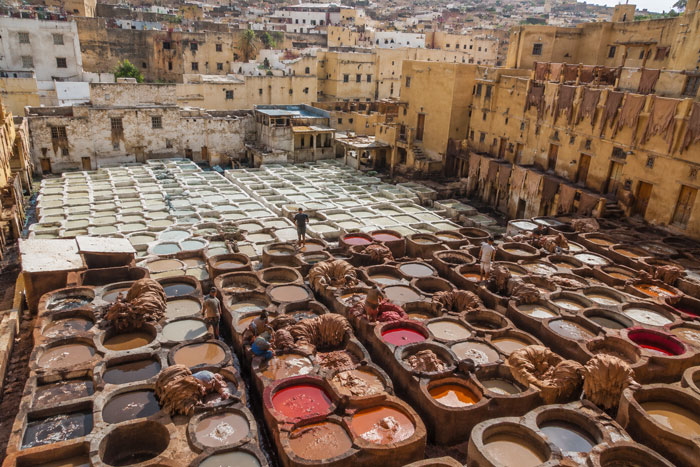
Walking through the narrow streets surrounding the tanneries, visitors can witness an extraordinary scene: large stone vats filled with natural dyes, craftsmen working under the sun, and rows of freshly treated leather drying above the Medina rooftops. The atmosphere is vibrant, authentic, and deeply connected to the cultural identity of Fes.
The History of Leather Making in Fes
Leather production in Fes dates back to the early medieval period, shortly after the city itself was founded in the 8th century. Thanks to its strategic location on ancient trade routes, Fes quickly became an important center for artisans, merchants, and scholars. Over time, leather craftsmanship developed into one of the city’s most respected and valuable trades.
The tanneries were traditionally organized into artisan guilds, with specialized craftsmen responsible for each step of the process. Skills and techniques were passed down from father to son for generations, helping preserve the authenticity of Moroccan leather-making traditions until today.
Fes soon became internationally known for producing durable and beautifully dyed leather products, exported across Africa, the Middle East, and Europe. In fact, the English word “Morocco leather” was historically associated with the fine leather produced in the tanneries of Fes.
Why the Tanneries Are Famous Worldwide
The leather tanneries of Fes are famous not only for their history but also for their unique traditional methods, which have changed very little over the centuries. Unlike modern industrial factories, the tanning process here is still largely manual and uses natural ingredients to soften and color the leather.
One of the most remarkable features of the tanneries is the use of natural dyes derived from plants and minerals. Saffron creates bright yellow tones, indigo produces blue shades, mint gives green hues, and poppy flowers are used for red coloring. This natural approach contributes to the rich appearance and high quality of Moroccan leather products.
The visual beauty of the tanneries also attracts photographers and travelers from around the world. The honeycomb-shaped dye pits, colorful leather vats, and panoramic rooftop views have become iconic images of Morocco. As part of the UNESCO-listed Medina of Fes, the tanneries remain one of the city’s most visited and culturally important landmarks.
Chouara Tannery: The Most Famous Tannery in Fes
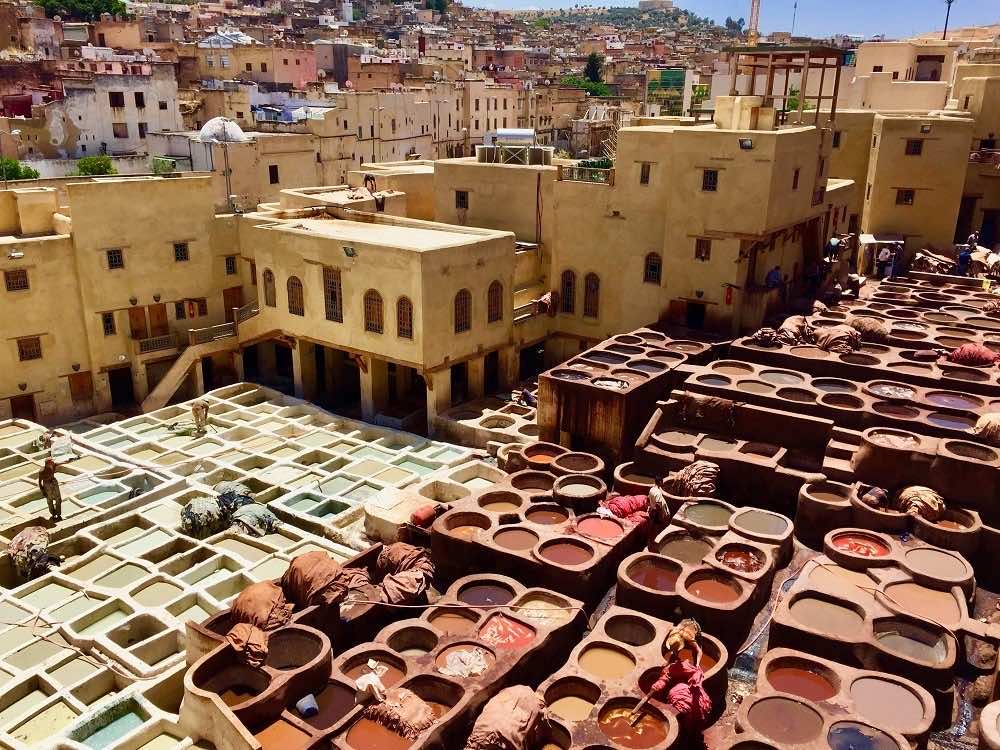
Among all the leather tanneries in Morocco, the Chouara Tannery is by far the most famous and impressive. Known for its colorful dye pits, traditional leather-making techniques, and breathtaking rooftop views, Chouara has become one of the most photographed landmarks in Fes. For many travelers, visiting this historic tannery is one of the highlights of exploring the ancient Medina.
Built nearly a thousand years ago, Chouara Tannery remains fully operational today. Dozens of skilled artisans continue to work by hand every day, preserving a craft that has shaped the identity and economy of Fes for centuries.
Create Your Own Handmade Leather Souvenir in Fes
Don’t just watch the artisans, become one for a day. Join our authentic leather workshop in Fes and discover the traditional techniques used by local craftsmen for generations. Guided step-by-step by skilled artisans inside the ancient Medina, you’ll learn how to cut, stitch, shape, and personalize genuine Moroccan leather using traditional handmade methods.
Choose your own creation and craft a unique souvenir to take home:
- Handmade leather bag
- Wallet or card holder
- Leather belt
- Keychain
- Small pouch or accessory
Where Is Chouara Tannery Located?
Chouara Tannery is located inside the old Medina of Fes, also known as Fes el-Bali, one of the world’s largest car-free urban areas. The tannery sits in the northeastern part of the Medina, surrounded by narrow alleyways, traditional souks, and artisan workshops.
Because the Medina is a maze of small streets, finding the tannery alone can sometimes be challenging for first-time visitors. Most travelers reach it by following local signs, joining a guided tour, or asking shopkeepers for directions. Many leather shops around the tannery also offer free access to panoramic terraces overlooking the dye pits.
Nearby attractions include:
- Traditional leather shops
- Spice and textile souks
- Historic madrasas
- Artisan workshops
- Local cafés with Medina views
The walk to Chouara Tannery is part of the experience itself, allowing visitors to discover the vibrant daily life and craftsmanship of the old city.
What Makes Chouara Tannery Special?
What makes Chouara Tannery unique is its remarkable preservation of ancient leather-making traditions. Unlike industrial factories, nearly every stage of production here is done manually using techniques that have remained unchanged for generations.
The tannery is instantly recognizable for its large stone vats filled with colorful natural dyes. Workers stand inside the circular pits treating leather by hand, creating a striking visual scene unlike anywhere else in the world. From rooftop terraces, visitors can enjoy panoramic views of the entire tannery, making it one of the best photography spots in Fes.
Chouara is also famous for the quality of its leather products. The tanned hides are transformed into:
- Handmade leather bags
- Traditional Moroccan slippers (babouches)
- Jackets and belts
- Wallets and purses
- Poufs and home décor items
Many visitors come not only to observe the tanning process but also to shop for authentic Moroccan leather directly from local artisans.
Best Time to Visit Chouara Tannery
The best time to visit Chouara Tannery is usually in the morning, when artisans are actively working and the lighting is ideal for photography. Early visits also help avoid the larger tourist crowds that arrive later in the day.
For the best overall experience:
- Visit between 9:00 AM and 11:00 AM
- Spring and autumn offer the most comfortable temperatures
- Sunny days provide the clearest views of the colorful dye pits
Summer afternoons can become extremely hot inside the Medina, while rainy winter days may reduce activity in the tannery.
Photography lovers should bring a camera or smartphone with good zoom capabilities, as rooftop terraces provide spectacular wide-angle views over the entire leather production area.
How Leather Is Made in the Fes Tanneries
One of the most fascinating parts of visiting the Fes leather tanneries is discovering how leather is traditionally made by hand. The process has remained largely unchanged for centuries and continues to rely on natural ingredients, physical labor, and artisanal expertise passed down through generations.
From raw animal hides to finished leather products, every stage of production takes place inside the tannery using traditional Moroccan methods. While modern factories use machines and chemicals, the tanneries of Fes preserve a slower and more authentic approach that gives Moroccan leather its unique character and quality.
Step 1 – Cleaning and Softening the Hides
The process begins with raw animal hides, usually from cows, goats, sheep, and camels. These hides are first soaked in large stone vats filled with water and natural treatment mixtures designed to remove hair, fat, and impurities.
One of the most traditional methods involves using lime, salt, and natural ammonia derived from pigeon droppings. Although surprising to many visitors, this ancient technique helps soften the leather naturally and prepares it for dye absorption later in the process.
The hides are then washed repeatedly and kneaded by hand or foot to make them softer and more flexible. This stage can take several days depending on the type and thickness of the leather.
Step 2 – Natural Dyeing Process
After the hides are cleaned and softened, they move into the famous colorful dye pits that make Chouara Tannery so iconic. Unlike industrial leather production, the tanneries of Fes continue to use natural vegetable and mineral dyes to create rich and vibrant colors.
Traditional natural dyes include:
- Saffron for yellow tones
- Indigo for blue
- Henna and mint for green shades
- Poppy flowers for red
- Charcoal for black
- Cedar wood and natural oils for brown tones
Artisans manually dip and rotate the leather inside the dye pits to ensure even coloring. Depending on the desired finish, the leather may remain in the dye for several hours or even days.
This natural dyeing process is one of the reasons Moroccan leather is highly valued around the world for its softness, durability, and authentic appearance.
Step 3 – Drying and Finishing the Leather
Once dyed, the leather is stretched and left to dry naturally under the Moroccan sun. Visitors can often see large pieces of leather hanging from rooftops and walls throughout the Medina.
After drying, skilled craftsmen begin the finishing stage. The leather is cut, polished, softened again, and prepared for transformation into handmade products such as bags, jackets, slippers, belts, and wallets.
Each item is crafted by local artisans using traditional hand tools and techniques, making every piece slightly unique. This handmade quality is part of what gives Moroccan leather goods their authenticity and charm.
Why Traditional Methods Still Matter
In a world dominated by industrial mass production, the leather tanneries of Fes represent a rare example of living craftsmanship. The traditional methods used here help preserve an important part of Morocco’s cultural heritage while supporting local artisan communities.
Many travelers appreciate that the tanning process relies heavily on natural ingredients rather than modern synthetic chemicals. Although physically demanding, these traditional practices contribute to the distinctive texture, smell, and quality of Moroccan leather.
By visiting the tanneries or purchasing handmade leather products, travelers also help support local craftsmen and protect centuries-old artisanal traditions that continue to define the cultural identity of Fes.
What Does the Tannery Smell Like?
One of the first things visitors notice when arriving at the Fes leather tanneries is the strong and unmistakable smell. Before even seeing the colorful dye pits of Chouara Tannery, many travelers can recognize the scent from nearby streets in the Medina. While the smell may surprise first-time visitors, it is a natural part of the traditional leather-making process that has existed in Fes for centuries.
Despite its reputation, most visitors quickly adapt after a few minutes, especially once they begin observing the fascinating craftsmanship and panoramic views of the tannery.
Why the Smell Is Strong
The distinctive smell comes mainly from the early stages of leather processing. To soften and prepare the animal hides, craftsmen use traditional natural substances such as lime, salt, and natural ammonia. Historically, pigeon droppings have been an essential ingredient because they contain ammonia, which helps break down and soften leather fibers naturally.
Combined with wet animal hides, dye pits, and constant exposure to heat and sunlight, these materials create the powerful odor commonly associated with the tanneries.
Although modern factories use synthetic chemicals and machinery, the tanneries of Fes continue to rely on these ancient techniques because they produce softer, higher-quality leather while preserving traditional craftsmanship.
The Mint Leaves Tradition Explained
To help visitors manage the smell, many shopkeepers and local guides offer fresh mint leaves when entering the tannery viewing terraces. Travelers often hold the mint close to their nose while observing the dye pits below.
This small gesture has become part of the classic tannery experience in Fes and is appreciated by many first-time visitors. Fortunately, the smell usually becomes less noticeable after a short time inside the tannery.
If you are sensitive to strong odors, here are a few useful tips:
- Visit early in the morning when temperatures are cooler
- Carry tissues or a scarf with perfume or essential oils
- Spend time on rooftop terraces where airflow is stronger
- Take short breaks while exploring the Medina
Most travelers agree that the unique atmosphere, history, and craftsmanship of the tanneries far outweigh the temporary discomfort of the smell. In fact, for many visitors, the sensory experience is part of what makes the leather tanneries of Fes so authentic and unforgettable.
What to Buy at the Fes Leather Tanneries
Shopping at the Fes leather tanneries is one of the highlights of visiting the Medina. After watching the traditional tanning process, visitors can explore nearby artisan shops filled with handmade Moroccan leather goods crafted directly from the tanneries. From stylish bags and traditional slippers to jackets and home décor, the variety of products available is impressive.
Because many items are handmade using genuine Moroccan leather, shopping in Fes offers a unique opportunity to purchase authentic artisan products while supporting local craftsmen and family workshops.
Handmade Leather Bags
Leather bags are among the most popular items sold in the tanneries of Fes. Visitors can find everything from elegant handbags and backpacks to travel bags, satchels, and laptop cases.
Many Moroccan leather bags are handmade using soft goat or camel leather and decorated with traditional stitching or embossed patterns. Some shops also offer custom-made designs and personalized products.
When shopping for a leather bag:
- Check the stitching quality
- Smell the leather for authenticity
- Feel the softness and flexibility
- Compare prices between several shops
Authentic handmade bags may cost more than factory-made souvenirs, but they are generally more durable and unique.
Traditional Moroccan Slippers (Babouches)
Babouches, the traditional Moroccan leather slippers, are another must-buy item in Fes. These comfortable handmade shoes are available in many colors, patterns, and styles for both men and women.
Some babouches are simple and traditional, while others feature embroidery, pointed tips, or modern fashion-inspired designs. Soft yellow babouches made from natural leather are especially famous in Morocco.
They make excellent souvenirs because they are:
- Lightweight and easy to pack
- Affordable compared to other leather goods
- Handmade by local artisans
- Available in many sizes and colors
- Leather Jackets
High-quality leather jackets are one of the premium products sold in the tanneries of Fes. Skilled craftsmen create jackets using soft lamb, goat, or camel leather, often tailored by hand.
Compared to prices in Europe or North America, genuine leather jackets in Morocco can offer excellent value for money. Some workshops even provide custom sizing and made-to-measure designs.
Before buying a jacket:
- Check the lining and stitching
- Confirm the leather type
- Try different fits and styles
- Negotiate politely
A well-made Moroccan leather jacket can last for many years and become softer with time.
Wallets, Belts, and Small Accessories
If you are looking for smaller souvenirs or affordable gifts, the tanneries also offer a wide range of leather accessories, such as:
- Wallets
- Card holders
- Belts
- Keychains
- Passport covers
- Coin purses
These products are easy to carry and often handcrafted using leftover leather from larger productions, making them more budget-friendly while still authentic.
Leather Poufs and Home Decor
Moroccan leather poufs are famous around the world for their elegant craftsmanship and bohemian style. These decorative leather cushions are often hand-stitched and embroidered by artisans in Fes.
Visitors can also find:
- Leather ottomans
- Decorative pillows
- Handmade lamps
- Leather-covered boxes
- Home accessories
Many shops can ship larger items internationally, which is useful for travelers who want to decorate their homes with authentic Moroccan craftsmanship.
How to Identify Genuine Moroccan Leather
Not every product sold around the Medina is authentic handmade leather, so it’s important to know how to recognize quality items.
Signs of genuine Moroccan leather include:
- A natural leather smell
- Soft and flexible texture
- Small imperfections from handmade work
- Strong stitching and finishing
- Natural color variations
Avoid products that feel overly stiff, smell strongly of chemicals, or appear too perfectly uniform, as they may be synthetic or factory-made.
Bargaining Tips for Leather Shopping in Fes
Negotiation is a normal part of shopping in Morocco, especially inside the Medina. Prices are often initially higher for tourists, so polite bargaining is expected.
Useful bargaining tips:
- Compare prices in multiple shops
- Stay friendly and respectful
- Don’t appear overly rushed
- Negotiate gradually
- Be prepared to walk away if needed
Most importantly, remember that handmade leather products require many hours of skilled labor. Supporting local artisans fairly helps preserve the traditional craftsmanship that makes Fes famous worldwide.
How to Avoid Tourist Scams at the Tanneries
Like many popular tourist attractions around the world, the leather tanneries of Fes can sometimes attract aggressive sellers, unofficial guides, and overpriced shopping experiences. While most artisans and shopkeepers are honest and welcoming, it is still important for visitors to understand how to navigate the Medina confidently and avoid common tourist traps.
With a little preparation and awareness, visiting the tanneries can remain one of the most authentic and rewarding experiences in Fes.
Common Tourist Traps Around the Tanneries
Because the Medina of Fes is large and confusing for first-time visitors, some locals may approach tourists claiming the tannery is “closed” or “far away” in order to redirect them to specific shops or request money for directions.
Other common situations include:
- Unofficial guides demanding payment afterward
- Pressure to buy expensive leather products
- Extremely high starting prices
- Shops claiming all products are “100% camel leather”
- Sellers insisting on immediate purchases
While many interactions are harmless, some visitors may feel uncomfortable if they are unprepared for the intensity of sales tactics inside busy tourist areas.
How to Navigate the Medina Safely
The easiest way to avoid confusion is to plan your route in advance or visit with a trusted local guide. Since the streets of Fes Medina form a maze of narrow alleys, getting lost is very common, even with GPS.
Helpful tips include:
- Download an offline map before visiting
- Follow official signs toward Chouara Tannery
- Stay calm if approached by persistent sellers
- Politely decline unwanted assistance
- Carry small cash for minor purchases or tips
Most people in the Medina are friendly and helpful, especially when approached respectfully.
Smart Shopping Tips at the Tanneries
Shopping for leather goods in Fes can be an exciting experience, but taking your time is important before making a purchase.
To shop wisely:
- Compare prices between several shops
- Inspect stitching and leather quality carefully
- Ask questions about the leather type
- Avoid rushing into expensive purchases
- Negotiate politely and patiently
If a price feels too high, it is perfectly acceptable to thank the seller and continue browsing elsewhere. Many shops sell similar products, so exploring multiple options often leads to better deals and quality.
Should You Buy Directly From Tannery Shops?
Many leather shops connected to the tannery terraces offer authentic handmade products, and some are run by families who have worked in leather craftsmanship for generations. Buying directly from these artisans can help support local traditional industries.
However, not all products are handmade locally, so it is still important to evaluate quality carefully. Visitors looking for premium craftsmanship should focus on:
- Handmade stitching
- Natural leather smell
- Soft texture
- Artisan-made details
- Transparency about production methods
Some workshops also allow visitors to observe artisans sewing or finishing products by hand, which adds authenticity to the shopping experience.
Why a Local Guide Can Improve the Experience
For many travelers, visiting the tannery with a knowledgeable local guide makes the experience far more enjoyable. A good guide can:
- Explain the leather-making process
- Help avoid scams or pressure selling
- Navigate hidden streets of the Medina
- Introduce trusted artisan workshops
- Share the cultural history of the tanneries
Guided experiences also provide deeper insight into the daily life of craftsmen and the importance of leather production in the cultural heritage of Fes.
By staying informed and shopping thoughtfully, visitors can enjoy the leather tanneries safely while supporting the artisans who continue to preserve one of Morocco’s oldest and most fascinating traditions.
Best Viewpoints for the Tanneries
One of the most unforgettable moments when visiting the Fes leather tanneries is seeing the panoramic view of the colorful dye pits from above. The elevated terraces surrounding Chouara Tannery offer breathtaking perspectives of artisans working by hand inside the stone vats, creating one of the most iconic scenes in Morocco.
Whether you are a photographer, traveler, or cultural enthusiast, finding the right viewpoint can completely transform your experience of the tanneries.
Leather Shop Terraces Overlooking the Tannery
The best views of Chouara Tannery are usually located inside nearby leather shops built around the tannery itself. Many shop owners invite visitors upstairs to rooftop terraces or balconies where the entire leather-making process can be observed from above.
From these terraces, you can clearly see:
- The circular dye pits filled with natural colors
- Artisans treating and dyeing leather by hand
- Rows of hides drying under the sun
- The surrounding rooftops of the ancient Medina
Most terrace visits are technically free, although visitors are often guided through the shop afterward where leather products are displayed for sale. Even if you choose not to buy anything, it is polite to thank the shopkeepers for allowing access to the viewpoint.
Best Photography Tips for the Tanneries
The leather tanneries of Fes are among the most photographed locations in Morocco, and the lighting conditions can make a big difference in capturing great images.
For the best photography results:
- Visit in the morning for softer natural light
- Use rooftop terraces for wide panoramic shots
- Capture both close-up artisan details and wide scenes
- Bring a zoom lens if using a professional camera
- Avoid midday sunlight during summer
The colorful dye pits create beautiful contrasts that look especially striking in aerial-style compositions. Photographers often focus on the symmetry of the stone vats and the movement of workers inside the tannery.
If you want authentic photos, try capturing:
- Craftsmen working by hand
- Leather drying on rooftops
- Natural dye colors
- Traditional tools and techniques
- Daily life around the Medina
Always ask permission before taking close-up portraits of artisans.
Can You Visit the Tanneries Without a Guide?
Yes, it is completely possible to visit the tanneries independently. Many travelers explore Chouara Tannery on their own while wandering through the Medina.
However, because the streets of Fes are extremely narrow and complex, some visitors find navigation difficult. The tannery entrances are not always obvious, and many routes involve maze-like alleys filled with shops and crowds.
Visiting independently offers:
- More flexibility
- Time to explore at your own pace
- Freedom for photography and shopping
- On the other hand, visiting with a local guide can provide:
- Historical and cultural explanations
- Easier navigation
- Access to hidden artisan workshops
- Better understanding of the leather-making process
Both options can be rewarding depending on your travel style. Independent travelers often enjoy the adventure of discovering the tannery naturally, while guided visitors benefit from deeper cultural insight and a smoother experience overall.
Visiting the Tanneries With a Local Guide
While it is possible to explore the leather tanneries independently, many travelers find that visiting with a local guide offers a much richer and more meaningful experience. The Medina of Fes is one of the largest and oldest medieval cities in the world, filled with narrow alleyways, hidden workshops, and centuries of history that can easily be missed without local knowledge.
A guided visit not only helps you navigate the maze-like streets but also allows you to better understand the traditions, techniques, and cultural importance of leather craftsmanship in Fes.
Benefits of Visiting With a Local Guide
The leather tanneries are far more than just a photo stop. Behind the colorful dye pits lies a complex artisanal tradition that has shaped the economy and identity of Fes for generations. A knowledgeable guide can explain every stage of the process and provide historical context that most visitors would not discover alone.
Some of the main benefits include:
Easier Navigation Through the Medina
The streets surrounding Chouara Tannery can be confusing, especially for first-time visitors. Local guides know the fastest and most authentic routes while helping travelers avoid unnecessary hassle or getting lost.
Understanding the Leather-Making Process
Watching artisans work becomes much more fascinating when you understand what is happening in each stage of production.
Guides can explain:
- How the hides are cleaned
- Why are natural ingredients used
- The meaning of different dye colors
- How leather products are handmade
Access to Hidden Workshops
Some artisan workshops are hidden deep inside the Medina and are difficult to discover independently. Local guides often introduce visitors to small family-run workshops where traditional craftsmanship is still practiced by hand.
These experiences feel more authentic and personal compared to crowded tourist shops.
Cultural and Historical Insights
The tanneries are deeply connected to the history of Fes and Moroccan artisan culture. A guide can share stories about:
- The history of Chouara Tannery
- Medieval trade routes
- Traditional artisan guilds
- The role of leather in Moroccan society
These details transform the visit from simple sightseeing into a true cultural experience.
Leather Workshops and Hands-On Experiences
In recent years, many travelers have become interested in interactive artisan experiences rather than only observing from a distance. Some local workshops in Fes now offer hands-on leather crafting activities where visitors can learn directly from skilled craftsmen.
These workshops may include:
- Learning basic leatherworking techniques
- Cutting and stitching leather by hand
- Creating small leather souvenirs
- Personalizing handmade items
- Meeting local artisans in their studios
Participating in a leather workshop allows visitors to connect more deeply with Moroccan craftsmanship while supporting local artisan communities directly.
For travelers interested in authentic cultural experiences, these workshops provide a memorable opportunity to go beyond traditional tourism and actively participate in one of Fes’ oldest artistic traditions.
Supporting Local Artisans and Traditional Craftsmanship
Choosing local artisan workshops and family-owned businesses helps preserve the centuries-old leather-making traditions of Fes. In a world increasingly dominated by factory production and mass tourism, many craftsmen continue to rely on handmade techniques passed down through generations.
By purchasing authentic handmade products or joining artisan experiences,
visitors contribute to:
- Preserving cultural heritage
- Supporting local families
- Encouraging sustainable craftsmanship
- Protecting traditional skills from disappearing
For many travelers, meeting the artisans behind the products becomes one of the most meaningful parts of visiting the leather tanneries of Fes.
Are the Fes Tanneries Ethical?
The question of whether the Fes leather tanneries are ethical has become increasingly important for modern travelers. As more visitors seek sustainable and responsible tourism experiences, many wonder about the working conditions, environmental impact, and treatment of animals involved in traditional leather production.
The answer is complex. The tanneries of Fes combine centuries-old artisanal traditions with physically demanding labor and traditional production methods that differ greatly from modern industrial factories. Understanding this balance helps visitors appreciate both the cultural significance and the challenges surrounding the leather industry in Morocco.
Traditional Craftsmanship vs Modern Industry
The leather tanneries of Fes are not industrial factories. Most of the work is still carried out manually by skilled artisans using techniques that have been preserved for generations. Workers spend long hours cleaning, dyeing, softening, and drying leather by hand, often under difficult physical conditions.
Unlike mass-produced factory leather, Moroccan leather from Fes is valued for:
- Handmade craftsmanship
- Natural dyeing methods
- Small-scale production
- Traditional artisanal knowledge
Many visitors appreciate that the process remains deeply connected to cultural heritage rather than industrial automation.
However, the work itself can be physically exhausting. Artisans often stand for hours inside dye pits while handling wet hides and natural treatment materials. For some travelers, witnessing these labor-intensive conditions raises ethical questions about worker welfare and modernization.
Sustainability and Natural Production Methods
One reason many travelers consider the tanneries more sustainable than industrial leather factories is their continued use of natural ingredients and traditional dyeing methods.
The tanning process in Fes still relies heavily on:
- Plant-based dyes
- Natural oils
- Lime and salt treatments
- Sun drying techniques
- Handcrafted production
Compared to some modern leather industries that use large amounts of synthetic chemicals and automated processing, the environmental footprint of traditional Moroccan tanning can be lower in certain areas.
At the same time, environmental concerns still exist. Wastewater management and strong odors remain ongoing challenges in densely populated parts of the Medina. Local authorities and artisans have made efforts in recent years to improve working conditions and reduce environmental impact while preserving traditional methods.
Animal Welfare Considerations
The leather used in the tanneries generally comes from animals already processed for the food industry, including cows, goats, sheep, and camels. The tanneries themselves are not slaughterhouses but rather centers for transforming raw hides into usable leather products.
For travelers who avoid animal products entirely, visiting the tanneries may not align with their personal values. Others view traditional leather craftsmanship as part of a long-standing artisanal economy that makes use of materials that would otherwise become waste.
Ultimately, opinions on leather ethics vary depending on personal beliefs about sustainability, craftsmanship, and animal products.
Preserving Cultural Heritage in Fes
For many Moroccans, the tanneries are far more than tourist attractions. They represent an important cultural and historical tradition that has shaped the identity of Fes for over a thousand years.
The knowledge and skills used by tannery workers are part of Morocco’s living artisan heritage. Preserving these crafts helps maintain:
- Traditional knowledge
- Local employment
- Family-owned workshops
- Historic Medina culture
- Handmade production techniques
Many travelers choose to support ethical artisan workshops that prioritize fair craftsmanship, authentic handmade production, and respect for local traditions.
Tips for Visiting the Fes Tanneries
Visiting the leather tanneries of Fes is one of the most memorable experiences in Morocco, but the busy Medina, strong smells, and crowded streets can feel overwhelming for first-time travelers. A little preparation can make your visit far more comfortable, enjoyable, and authentic.
Whether you plan to explore independently or with a local guide, these practical tips will help you make the most of your visit to Chouara Tannery and the surrounding artisan district.
Wear Comfortable Shoes
The Medina of Fes is entirely pedestrian and filled with uneven stone streets, stairs, and narrow alleyways. Visiting the tanneries usually involves a lot of walking, sometimes for several hours.
Comfortable walking shoes are highly recommended, especially during warmer months when the Medina can become crowded and tiring to navigate.
Avoid:
- High heels
- Slippery shoes
- Heavy footwear during summer
Light and breathable clothing is also helpful, particularly between May and September.
Visit Early in the Morning
Morning is generally the best time to visit the tanneries. The weather is cooler, the lighting is better for photography, and artisans are actively working inside the dye pits.
Benefits of visiting early include:
- Smaller crowds
- Better rooftop views
- More comfortable temperatures
- Improved photo opportunities
- A more authentic atmosphere
The ideal visiting window is usually between 9:00 AM and 11:00 AM.
Bring Cash for Shopping and Tips
Although some larger leather shops accept credit cards, many small artisan workshops still prefer cash payments. Having Moroccan dirhams available makes shopping and small purchases easier inside the Medina.
You may also want small cash amounts for:
- Local guides
- Tips
- Drinks or snacks
- Small handmade souvenirs
It’s best not to carry excessive amounts of money while walking through crowded areas.
Be Prepared for the Smell
The traditional tanning process creates a strong odor that surprises many first-time visitors. While most people adjust after a few minutes, sensitive travelers may prefer to come prepared.
Helpful tricks include:
- Carrying mint leaves
- Using a scarf with perfume
- Staying on open-air terraces
- Taking short breaks if needed
Fortunately, the incredible visual experience usually outweighs the temporary discomfort.
Respect Local Artisans
The tannery workers and craftsmen are part of a living artisan tradition that has existed in Fes for centuries. While photography is common, visitors should always remain respectful when taking pictures of people working.
Good etiquette includes:
- Asking permission before close-up portraits
- Avoiding disruptive behavior
- Respecting workspaces
- Speaking politely during negotiations
Most artisans are welcoming and proud to share their craft when approached respectfully.
Don’t Rush the Experience
Many travelers treat the tannery as a quick photo stop, but taking your time allows you to better appreciate the craftsmanship, culture, and atmosphere of the Medina.
Try to:
- Explore surrounding artisan streets
- Visit several rooftop viewpoints
- Compare different leather shops
- Observe craftsmen working by hand
- Learn about the history of leather-making
The deeper you explore, the more rewarding the experience becomes.
Stay Aware Inside the Medina
The Medina of Fes is lively, crowded, and sometimes confusing for visitors. While it is generally safe, staying aware of your surroundings is important.
Basic safety tips:
- Keep valuables secure
- Ignore overly aggressive sellers politely
- Avoid following unofficial guides
- Use offline maps when needed
- Stay hydrated during summer
If you ever feel lost, most shopkeepers and local families are happy to help with directions.
With the right mindset and preparation, visiting the Fes leather tanneries becomes far more than a tourist attraction, it becomes an unforgettable journey into one of Morocco’s oldest and most fascinating artisan traditions.
Frequently Asked Questions About Fes Leather Tanneries
Is Chouara Tannery Free to Visit?
Yes, visiting Chouara Tannery itself is generally free. Most visitors access the panoramic viewpoints through nearby leather shops surrounding the tannery. Shopkeepers usually invite travelers onto rooftop terraces to observe the dye pits from above.
While there is no official entrance fee, visitors are often encouraged to browse the leather products inside the shop afterward. Purchasing something is not mandatory, but supporting local artisans is always appreciated.
How Old Are the Fes Tanneries?
The leather tanneries of Fes are believed to date back more than 1,000 years. Chouara Tannery, the most famous tannery in the city, was established during the medieval period and remains active today.
The tanning methods used in Fes have changed very little over the centuries, making the tanneries one of the oldest continuously operating leather production centers in the world.
What Animals Are Used for Moroccan Leather?
The leather produced in Fes commonly comes from:
- Cow hides
- Goat leather
- Sheep leather
- Camel leather
Different animal hides are used depending on the final product. Goat and sheep leather are often softer and used for bags, slippers, and clothing, while cow leather is generally thicker and more durable.
What Is Moroccan Leather Famous For?
Moroccan leather is internationally known for its:
- Soft texture
- Handmade quality
- Natural dyeing process
- Durability
- Traditional craftsmanship
Leather produced in Fes is especially respected because it is still processed using ancient artisanal techniques rather than industrial mass production.
Historically, high-quality “Morocco leather” was exported throughout Europe and the Middle East for centuries.
Are the Fes Tanneries Worth Visiting?
Absolutely. For many travelers, the leather tanneries are one of the most unique and memorable attractions in Morocco.
Visitors enjoy:
- Watching traditional craftsmanship in action
- Exploring the ancient Medina
- Taking panoramic photographs
- Shopping for authentic handmade leather goods
- Learning about Moroccan artisan culture
The tanneries offer an experience that combines history, craftsmanship, culture, and photography all in one place.
How Long Does a Tannery Visit Take?
Most visitors spend between 30 minutes and 2 hours exploring the tanneries, depending on their interests.
A quick visit may include:
- Viewing the dye pits
- Taking photos
- Visiting one or two leather shops
Longer visits often involve:
Guided Medina tours
Shopping for handmade leather products
Visiting artisan workshops
Learning about the tanning process in detail
Can You Visit the Tanneries Without a Guide?
Yes, many travelers visit independently. However, because the Medina of Fes is extremely maze-like, some visitors prefer hiring a local guide for easier navigation and cultural explanations.
A guide can also help visitors:
- Discover hidden workshops
- Avoid tourist scams
- Learn the history of the tanneries
- Communicate with artisans
Both guided and self-guided visits can be enjoyable depending on your travel style.
What Is the Best Time to Visit the Fes Tanneries?
The best time to visit is usually in the morning, especially between 9:00 AM and 11:00 AM.
Morning visits offer:
- Cooler temperatures
- Better lighting for photography
- More active artisan work
- Fewer crowds
Spring and autumn are also considered the best seasons for visiting Fes due to the more comfortable weather.
Can You Buy Authentic Leather in Fes?
Yes, Fes is one of the best places in Morocco to buy authentic handmade leather goods directly from local artisans.
Popular items include:
- Leather bags
- Babouches (Moroccan slippers)
- Jackets
- Wallets
- Belts
- Poufs and home décor
To ensure authenticity:
- Compare multiple shops
- Inspect stitching carefully
- Check the leather smell and texture
- Avoid products that feel synthetic
Is the Smell Really That Bad?
The smell inside the tannery can be strong, especially for first-time visitors, because of the natural tanning process. However, most travelers adapt quickly after a few minutes.
Many shopkeepers offer fresh mint leaves to help reduce the odor while viewing the tannery from rooftop terraces.
Despite the smell, most visitors still consider the experience absolutely worth it because of the incredible craftsmanship and cultural atmosphere.
Conclusion:
The leather tanneries of Fes are far more than a tourist attraction; they are a living symbol of Morocco’s rich artisanal heritage. Hidden within the ancient Medina, these historic workshops continue to preserve centuries-old leather-making traditions that have shaped the identity of Fes for generations.
From the colorful dye pits of Chouara Tannery to the skilled craftsmen carefully transforming raw hides into handmade leather goods, every corner of the tannery reflects authenticity, history, and cultural pride. Visiting the tanneries offers travelers a rare opportunity to witness traditional craftsmanship still practiced almost exactly as it was hundreds of years ago.
Whether you come to admire the panoramic views, learn about the fascinating tanning process, shop for genuine Moroccan leather, or simply experience the vibrant atmosphere of the Medina, the Fes leather tanneries leave a lasting impression on nearly every visitor.
Beyond the photographs and souvenirs, the true beauty of the tanneries lies in the people behind the craft, the artisans, families, and workshops that continue to keep this ancient tradition alive in a rapidly modernizing world.
If you are planning a trip to Morocco, exploring the leather tanneries of Fes is an experience you should not miss. And for travelers looking for a deeper cultural connection, joining a local leather workshop or guided artisan experience can transform a simple visit into a truly unforgettable journey into the heart of Moroccan craftsmanship.