

Different Types of Moroccan Rugs: Explore Moroccan Carpet Styles
Moroccan rugs are among the most admired handmade textiles in the world. Known for their rich history, bold patterns, and exceptional craftsmanship, these traditional carpets have become a favorite choice for interior designers, collectors, and homeowners seeking authentic décor with character. From minimalist black-and-white Beni Ourain rugs to vibrant Azilal and vintage Boujad styles, the different types of Moroccan rugs each tell a unique story rooted in Berber culture and regional traditions.
For centuries, Berber tribes across the Atlas Mountains of Morocco have handwoven rugs using natural wool, traditional weaving techniques, and symbolic motifs inspired by daily life, nature, and spirituality. Every Moroccan rug is more than just a decorative piece, it reflects generations of craftsmanship and cultural identity passed down from one artisan to another.
Today, Moroccan rugs are highly sought after in modern, bohemian, Scandinavian, and luxury interiors thanks to their versatility, durability, and timeless aesthetic. Whether you are searching for a soft wool rug for a living room, a colorful statement piece, or an authentic handmade Berber carpet, understanding the different Moroccan rug styles can help you choose the perfect piece for your space.
In this guide, we will explore the most popular types of Moroccan rugs, including Beni Ourain, Azilal, Boujad, Boucherouite, Kilim, and more. You will discover their origins, unique characteristics, materials, and how each style fits into contemporary home décor.
What Makes Moroccan Rugs Unique?
Moroccan rugs stand apart from other handmade carpets because of their deep cultural heritage, artisanal craftsmanship, and distinctive tribal aesthetics. Unlike mass-produced rugs, authentic Moroccan rugs are woven by hand using traditional methods that have been preserved for generations across the Atlas Mountains and Berber villages of Morocco.
Beyond their beauty, Moroccan rugs are valued for the stories and symbolism woven into every piece. Each rug reflects the identity, emotions, and traditions of the artisan who created it, making every carpet truly one of a kind.
Handmade Berber Craftsmanship
One of the defining features of Moroccan rugs is their handmade production process. Skilled Berber women spend weeks or even months weaving each rug on traditional wooden looms using techniques passed down through generations.
Because every piece is handcrafted, no two Moroccan rugs are exactly alike. Slight variations in patterns, colors, and textures are considered part of their authenticity and charm. This artisanal approach gives Moroccan rugs a unique personality that machine-made carpets cannot replicate.
Traditional weaving methods also contribute to the exceptional durability of Moroccan wool rugs, allowing them to last for decades with proper care.
Natural Wool and Traditional Materials
Authentic Moroccan rugs are typically made from high-quality sheep wool sourced from the Atlas Mountains. The wool is prized for its softness, warmth, and resilience, making Moroccan carpets both comfortable and long-lasting.
Many traditional rugs are colored using natural dyes extracted from plants, saffron, henna, indigo, and other local materials. These organic pigments create rich earthy tones and beautifully aged color variations that enhance the rug’s character over time.
Some Moroccan rug styles, such as Boucherouite rugs, also incorporate recycled textiles and cotton fabrics, creating vibrant eco-friendly designs with bold textures and artistic patterns.
Symbolic Tribal Patterns and Meanings
Moroccan rugs are known for their geometric motifs, abstract symbols, and tribal-inspired patterns. These designs often carry symbolic meanings connected to protection, fertility, spirituality, family life, and nature.
Unlike factory-made carpets that follow standardized designs, traditional Berber rugs are often woven freely without fixed patterns. This spontaneous creativity gives Moroccan rugs their authentic artistic appearance and emotional depth.
Diamond motifs, zigzag lines, and asymmetrical shapes commonly found in Moroccan carpets represent centuries-old Berber symbolism that continues to inspire modern interior design today.
Why Moroccan Rugs Are Popular in Modern Interiors
The timeless beauty of Moroccan rugs makes them incredibly versatile for contemporary homes. Their handcrafted texture and neutral or colorful palettes blend effortlessly with many interior styles, including:
- Bohemian interiors
- Scandinavian décor
- Minimalist spaces
- Rustic homes
- Luxury contemporary interiors
Minimalist Beni Ourain rugs are especially popular in modern living rooms and bedrooms because of their soft wool texture and elegant geometric patterns. Meanwhile, colorful Azilal and Boujad rugs are often used as statement pieces to add warmth and personality to neutral spaces.
Main Types of Moroccan Rugs
Morocco is home to a wide variety of traditional rug styles, each originating from different Berber tribes and regions across the country. The differences in weaving techniques, colors, patterns, and materials make every Moroccan rug style unique. Understanding the main types of Moroccan rugs can help you choose the perfect carpet for your home while appreciating the rich cultural heritage behind each piece.
Beni Ourain Rugs
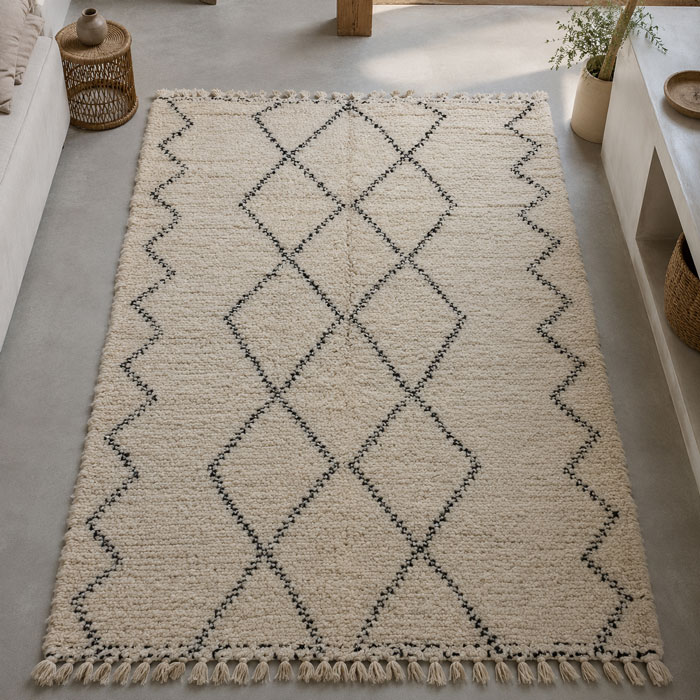
Beni Ourain rugs are among the most famous and luxurious Moroccan rugs in the world. Handmade by the Beni Ourain tribes of the Middle Atlas Mountains, these rugs are known for their thick wool pile, exceptional softness, and minimalist geometric patterns.
Traditionally woven from natural undyed sheep wool, Beni Ourain rugs usually feature black or dark brown diamond motifs on a creamy white background. Their clean and elegant appearance makes them highly popular in Scandinavian, minimalist, and modern interiors.
One of the reasons Beni Ourain rugs are so sought after is their comfort and warmth. The dense wool texture creates a soft surface that works perfectly in bedrooms, living rooms, and cozy spaces.
Key Features of Beni Ourain Rugs:
- Thick and ultra-soft wool
- Neutral black-and-white designs
- Handmade in the Atlas Mountains
- Minimalist tribal patterns
- Ideal for modern and luxury interiors
Azilal Rugs
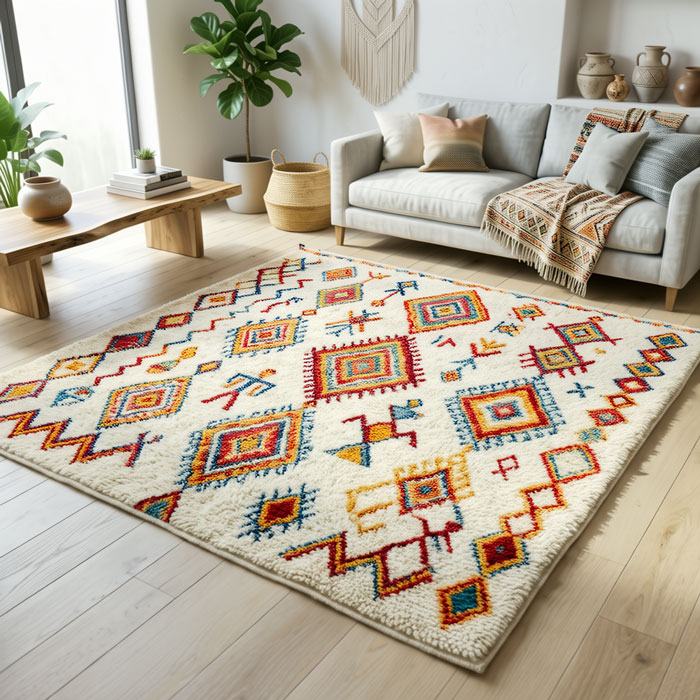
Azilal rugs are vibrant and artistic Moroccan carpets originating from the Azilal province in the High Atlas Mountains. Unlike the neutral tones of Beni Ourain rugs, Azilal rugs are famous for their colorful abstract patterns and expressive Berber symbolism.
These handmade rugs combine natural wool with cotton threads to create lightweight yet visually striking pieces. The designs often feature asymmetrical motifs, geometric shapes, and spontaneous artistic compositions inspired by Berber culture and daily life.
Azilal rugs have become increasingly popular in contemporary interiors because they add personality, creativity, and warmth to modern spaces.
Key Features of Azilal Rugs:
- Bright and colorful patterns
- Artistic abstract designs
- Soft wool combined with cotton
- Handmade by Berber artisans
- Perfect for bohemian and eclectic décor
Boujad Rugs
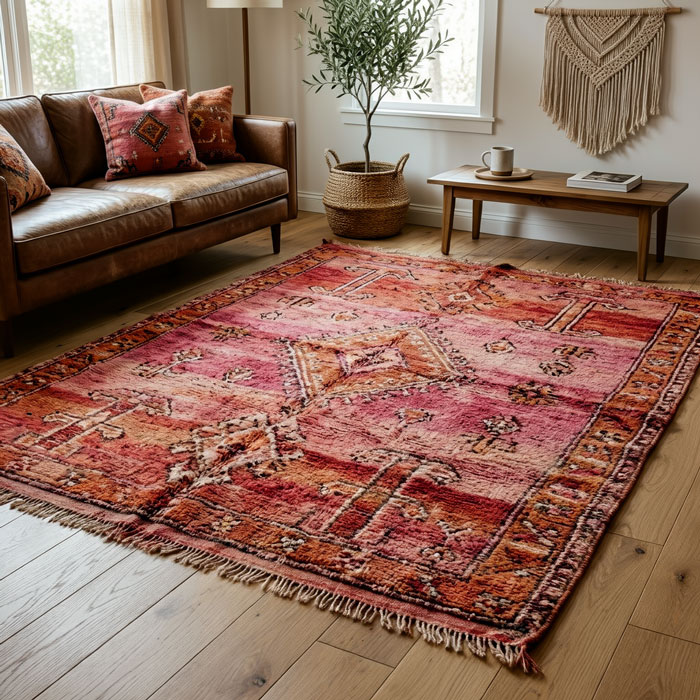
Boujad rugs are vintage-style Moroccan rugs known for their warm color palettes and rich tribal character. Originating from the Haouz region and woven by Berber tribes, these rugs often feature shades of pink, red, orange, purple, and earthy tones.
Boujad rugs are appreciated for their slightly distressed vintage appearance and emotionally expressive designs. Many rugs include symbolic Berber motifs representing protection, fertility, family, and spirituality.
Because of their warm colors and artistic textures, Boujad rugs are widely used in bohemian, rustic, and contemporary interiors.
Key Features of Boujad Rugs:
- Warm vintage color tones
- Abstract tribal patterns
- Handmade wool craftsmanship
- Unique aged appearance
- Popular in boho interiors
Boucherouite Rugs
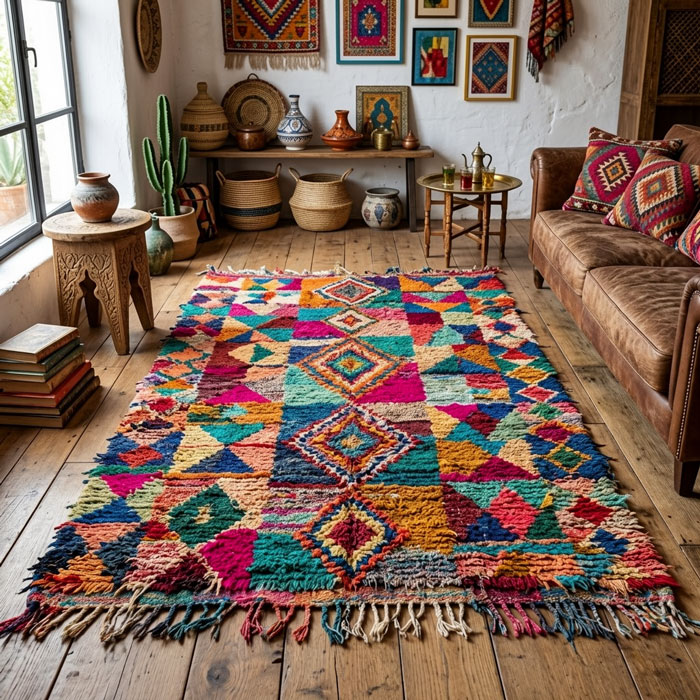
Boucherouite rugs are among the most creative and unconventional Moroccan rugs. Instead of using only wool, artisans weave these rugs from recycled textiles, cotton, and fabric scraps, transforming everyday materials into vibrant works of art.
The result is a colorful patchwork-style rug filled with texture, energy, and individuality. Every Boucherouite rug is completely unique, making them highly attractive for artistic and eclectic interiors.
In addition to their visual appeal, these rugs are considered environmentally friendly because they promote textile recycling and sustainable craftsmanship.
Key Features of Boucherouite Rugs:
- Made from recycled textiles
- Extremely colorful and vibrant
- Eco-friendly handmade rugs
- Rich textures and playful designs
- Ideal for eclectic and creative spaces
Kilim Moroccan Rugs
Moroccan Kilim rugs are flatwoven carpets known for their lightweight construction and geometric tribal patterns. Unlike thick pile rugs, Kilims are woven without knots, resulting in a thinner and more flexible textile.
These rugs are commonly used as floor coverings, wall decorations, or layered accents in modern interiors. Their versatile design and practical structure make them popular for both traditional and contemporary spaces.
Moroccan Kilim rugs often feature bold geometric shapes, stripes, and symbolic Berber motifs in earthy or colorful palettes.
Key Features of Moroccan Kilim Rugs:
- Flatwoven lightweight structure
- Reversible and durable
- Geometric tribal designs
- Easy to move and maintain
- Great for layering and wall décor
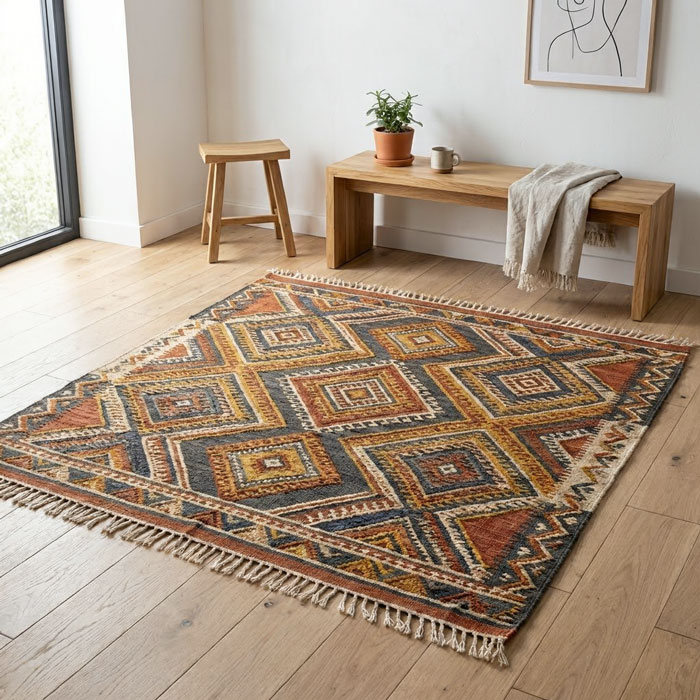
Mrirt Rugs
Mrirt rugs are considered the luxury category of Moroccan rugs. Handmade in the Middle Atlas region, these carpets are crafted using exceptionally fine wool and dense knotting techniques that create an incredibly soft and plush texture.
Mrirt rugs often feature elegant neutral tones and refined geometric patterns suitable for upscale modern interiors. Their premium craftsmanship and luxurious feel make them highly valued among interior designers and collectors.
Key Features of Mrirt Rugs:
- Premium high-density wool
- Ultra-soft luxurious texture
- Elegant minimalist patterns
- High-end Moroccan craftsmanship
- Perfect for luxury interiors
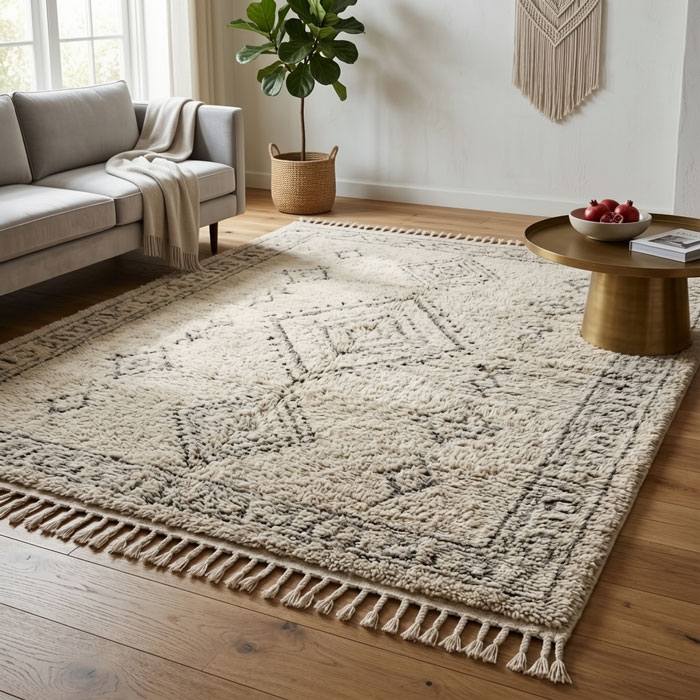
Zanafi Rugs
Zanafi rugs are traditional flatweave Moroccan rugs recognized for their reversible construction and bold black-and-white geometric patterns. Handmade by Berber tribes from the High Atlas Mountains, these rugs combine durability with minimalist aesthetics.
Their graphic tribal designs fit perfectly into modern, Scandinavian, and monochrome interiors while still preserving authentic Moroccan craftsmanship.
Key Features of Zanafi Rugs:
- Reversible flatweave design
- Black-and-white geometric motifs
- Durable handmade construction
- Minimalist tribal aesthetic
- Suitable for modern interiors
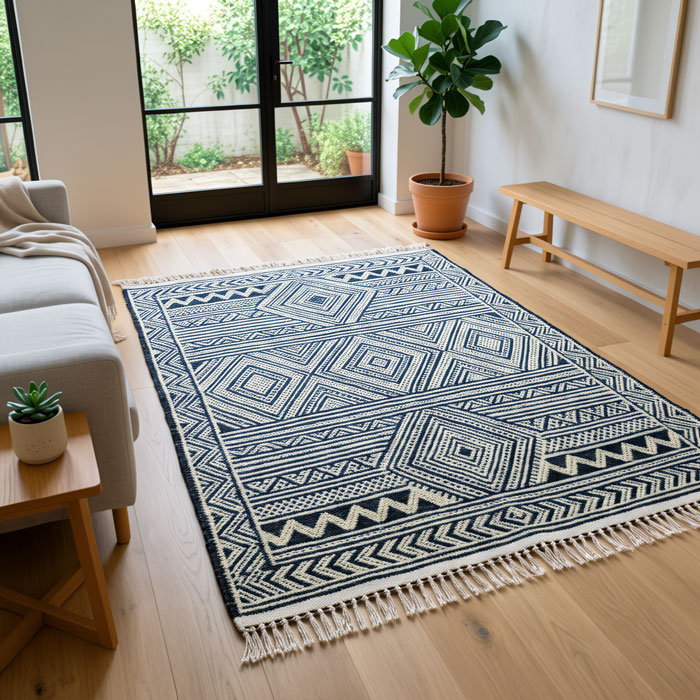
Weave Your Own Moroccan Masterpiece in Fes
Step into the world of authentic Moroccan craftsmanship and experience the timeless art of carpet weaving in the heart of Fes. Guided by skilled local artisans, you’ll discover traditional Berber techniques, learn the meaning behind tribal patterns, and create your own unique woven piece by hand.
Whether you are passionate about culture, design, or handmade art, this immersive workshop offers a rare opportunity to connect with Morocco’s rich weaving heritage in a truly unforgettable way.
Moroccan Rug Regions and Their Unique Styles
The beauty of Moroccan rugs comes not only from their designs but also from the regions where they are made. Across Morocco, different Berber tribes have developed distinct weaving traditions influenced by climate, lifestyle, local materials, and cultural heritage. Each region produces Moroccan rugs with unique textures, colors, symbols, and weaving techniques.
Understanding the origins of Moroccan rugs helps buyers appreciate the authenticity and craftsmanship behind every handmade piece.
Atlas Mountains Rugs
The Atlas Mountains are the heart of traditional Moroccan rug weaving. Stretching across central Morocco, this mountainous region is home to many Berber tribes known for producing some of the world’s most iconic handmade carpets.
Because winters in the Atlas Mountains can be extremely cold, many traditional rugs were originally woven for warmth and protection inside Berber homes and tents. This practical purpose explains why many Moroccan wool rugs are thick, durable, and exceptionally soft.
Today, Atlas Mountain rugs are admired globally for their authenticity and artistic beauty.
Common Characteristics of Atlas Mountain Rugs:
- Handmade from natural sheep wool
- Tribal geometric motifs
- Thick and durable construction
- Natural earthy or vibrant colors
- Deep cultural symbolism
- Middle Atlas Moroccan Rugs
The Middle Atlas region is especially famous for producing luxurious Beni Ourain and Mrirt rugs. Rugs from this area are generally characterized by soft wool textures, minimalist aesthetics, and neutral color palettes.
The colder climate of the Middle Atlas contributes to the production of high-quality wool, which is one of the reasons these rugs are known for their comfort and warmth.
Popular Rug Styles from the Middle Atlas:
- Beni Ourain rugs
- Mrirt rugs
- Thick-pile wool carpets
- Minimal geometric patterns
These styles are highly popular in modern interiors because of their clean and timeless appearance.
High Atlas Moroccan Rugs
The High Atlas Mountains are known for more colorful and artistic rug styles such as Azilal and Zanafi rugs. Berber artisans from this region often create expressive designs featuring symbolic motifs, asymmetrical patterns, and bold color combinations.
Compared to Middle Atlas rugs, High Atlas carpets tend to feel more artistic, spontaneous, and visually dynamic.
Popular Rug Styles from the High Atlas
- Azilal rugs
- Zanafi rugs
- Colorful tribal carpets
- Flatwoven geometric rugs
These rugs are ideal for bohemian, eclectic, and creative interior spaces.
Haouz Region Rugs
Located near Marrakech, the Haouz region is best known for Boujad rugs and other vintage Moroccan carpets filled with warm tones and abstract tribal patterns.
The rugs from this region often feature shades of red, pink, orange, and purple, creating a rich vintage aesthetic that has become highly desirable in contemporary décor.
Characteristics of Haouz Rugs:
- Warm earthy colors
- Vintage appearance
- Abstract Berber symbolism
- Soft wool textures
- Artistic tribal motifs
Boujad rugs from the Haouz region are especially popular in boho-inspired interiors.
Sahara and Southern Moroccan Rugs
In southern Morocco and near the Sahara Desert, weaving traditions focus more on lightweight flatwoven rugs and textiles adapted to warmer climates.
These Moroccan rugs often feature bold geometric designs, striped patterns, and lighter constructions suitable for desert living conditions.
Features of Southern Moroccan Rugs:
- Lightweight flatweave structure
- Bold geometric patterns
- Earth-toned natural dyes
- Durable woven textures
These styles work beautifully in rustic and natural interior designs.
The Tribal Influence Behind Moroccan Rugs
Every Moroccan rug reflects the identity and traditions of the Berber tribe that created it. Unlike factory-made carpets, tribal rugs are deeply personal and often woven without formal patterns or templates.
The motifs found in Moroccan rugs may symbolize:
- Protection from evil
- Fertility and family
- Nature and spirituality
- Life experiences and emotions
- Tribal identity and heritage
This cultural storytelling is one of the reasons authentic Moroccan rugs are considered both functional décor pieces and works of art.
How to Identify Authentic Moroccan Rugs
With the growing popularity of Moroccan rugs around the world, the market has become flooded with machine-made imitations inspired by traditional Berber designs. While these copies may resemble authentic Moroccan carpets at first glance, they lack the craftsmanship, quality, and cultural value of genuine handmade rugs.
Learning how to identify authentic Moroccan rugs can help you invest in a high-quality piece that will last for generations while supporting traditional artisans and preserving Morocco’s weaving heritage.
Handmade vs Machine-Made Moroccan Rugs
One of the easiest ways to recognize an authentic Moroccan rug is by examining how it was made. Traditional Moroccan rugs are entirely handwoven on wooden looms by Berber artisans, often requiring weeks or months of work.
Because they are handmade, authentic rugs naturally contain slight imperfections and irregularities. These small variations are actually signs of craftsmanship and originality.
Machine-made rugs, on the other hand, usually appear overly perfect and uniform.
Signs of Handmade Moroccan Rugs:
- Slightly uneven patterns or asymmetry
- Visible hand-knotting on the back
- Natural variation in colors and texture
- Fringe integrated into the rug structure
- Unique one-of-a-kind appearance
- Signs of Machine-Made Rugs
- Perfectly identical patterns
- Synthetic backing or glued fringe
- Uniform texture and stitching
- Mass-produced appearance
Authentic handmade Moroccan rugs should feel artistic and organic rather than perfectly manufactured.
Check the Wool Quality
Traditional Moroccan rugs are commonly made from natural sheep wool sourced from the Atlas Mountains. High-quality wool is one of the defining characteristics of authentic Moroccan carpets.
Real Moroccan wool rugs usually feel:
- Soft and thick
- Warm and dense
- Durable yet flexible
- Slightly oily because of natural lanolin
Synthetic machine-made rugs may feel rough, overly smooth, or plastic-like compared to genuine wool.
Premium Moroccan rugs, such as Mrirt and Beni Ourain carpets, are especially known for their exceptionally soft texture and luxurious wool quality.
Look for Natural Dyes and Color Variations
Many authentic Moroccan rugs use natural dyes extracted from plants, herbs, minerals, saffron, indigo, henna, and other local materials. These dyes create rich, earthy tones and subtle color changes throughout the rug.
Slight fading and tonal variation are normal in handmade Moroccan carpets and often enhance their vintage charm.
By contrast, synthetic dyes in machine-made rugs usually produce overly bright and uniform colors that lack depth and character.
Common Natural Moroccan Rug Colors:
- Cream and ivory
- Earthy brown tones
- Rust red and terracotta
- Indigo blue
- Soft pink and orange hues
These organic colors blend beautifully into modern interiors while maintaining authentic Berber aesthetics.
Examine the Back of the Rug
The back of a Moroccan rug reveals a great deal about its authenticity. Genuine handmade rugs show visible knots and weaving details because they are individually crafted by hand.
When you flip over an authentic Moroccan rug, you should notice:
- Irregular but detailed knotting
- Visible weaving structure
- Slight imperfections in symmetry
- No plastic or glued backing
Machine-made rugs often have:
- Perfectly identical stitching
- Synthetic mesh backing
- Uniform machine patterns
The back of the rug is often the clearest indicator of true handmade craftsmanship.
Understand Tribal Symbols and Patterns
Authentic Moroccan rugs feature symbolic Berber motifs passed down through generations. These geometric and abstract patterns often carry cultural meanings related to:
- Fertility
- Protection
- Nature
- Spirituality
- Family life
Because many artisans weave intuitively without fixed templates, every authentic Moroccan rug tells a unique visual story.
Mass-produced imitation rugs may copy these patterns superficially but often lack the depth, spontaneity, and artistic authenticity found in genuine Berber craftsmanship.
Buy from Trusted Moroccan Rug Sources
One of the best ways to ensure authenticity is to purchase Moroccan rugs directly from trusted artisans, workshops, cooperatives, or reputable Moroccan rug sellers.
Buying directly from Moroccan craftsmen not only guarantees better authenticity but also supports local artisan communities and traditional weaving techniques.
When shopping for authentic Moroccan rugs, look for sellers who provide:
- Information about the rug’s origin
- Details about the weaving process
- Material transparency
- Handmade certification when possible
Authentic Moroccan rugs are more than decorative pieces, they are handmade works of art that preserve centuries of Berber culture and craftsmanship.
How to Choose the Right Moroccan Rug
Choosing the perfect Moroccan rug involves more than simply selecting a beautiful pattern. Different Moroccan rug styles offer unique textures, colors, and personalities that can completely transform a space. The right rug should complement your interior design, fit your room size, and match the atmosphere you want to create in your home.
Whether you prefer minimalist Beni Ourain rugs, colorful Azilal designs, or vintage Boujad carpets, understanding how each style works in different interiors will help you make the best choice.
Choose the Right Moroccan Rug Size
Size is one of the most important factors when buying a Moroccan rug. A properly sized rug creates balance within a room and helps define the space visually.
Living Room Rugs
Large Moroccan area rugs work best in living rooms where furniture can partially sit on the rug. Beni Ourain and Mrirt rugs are especially popular for living spaces because of their soft texture and elegant appearance.
Bedroom Rugs
Soft wool Moroccan rugs add warmth and comfort to bedrooms. Many homeowners place large rugs under the bed or use smaller runner rugs on each side.
Dining Room Rugs
Flatwoven Moroccan Kilim rugs are practical choices for dining areas because they are lightweight and easier to clean.
Hallways and Entryways
Moroccan runner rugs create a welcoming atmosphere while adding texture and character to narrow spaces.
Match the Rug to Your Interior Style
Different types of Moroccan rugs complement different interior aesthetics. Choosing the right style can elevate the entire atmosphere of your home.
Minimalist and Scandinavian Interiors
Beni Ourain and Zanafi rugs are ideal for minimalist interiors thanks to their neutral tones and geometric black-and-white patterns.
Best choices:
- Beni Ourain rugs
- Zanafi rugs
- Mrirt rugs
- Bohemian Interiors
Colorful and artistic Moroccan rugs add warmth and personality to boho-inspired spaces.
Best choices:
- Azilal rugs
- Boujad rugs
- Boucherouite rugs
- Modern Contemporary Homes
Modern interiors often combine clean furniture with textured handmade rugs to create warmth and contrast.
Best choices:
- Minimal Beni Ourain rugs
- Elegant Mrirt rugs
- Neutral Kilim rugs
- Rustic and Natural Spaces
Vintage Moroccan rugs with earthy tones work beautifully in rustic homes and organic-inspired interiors.
Best choices:
- Boujad rugs
- Flatwoven Kilims
- Tribal Berber rugs
- Consider Color and Pattern
Moroccan rugs range from subtle neutral palettes to vibrant artistic designs. The color and pattern you choose can influence the mood of the room.
Neutral Moroccan Rugs
Cream, beige, black, and soft brown tones create calm and timeless interiors. These rugs blend easily into modern and Scandinavian spaces.
Colorful Moroccan Rugs
Bright Azilal and Boucherouite rugs act as statement pieces that bring energy and creativity into a room.
Geometric Tribal Patterns
Diamond motifs, zigzags, and abstract Berber symbols add visual texture without overwhelming the space.
When choosing patterns, consider the balance between your furniture, wall colors, and decorative elements.
Think About Texture and Comfort
Different Moroccan rug styles have different textures depending on the weaving technique and wool density.
Thick Pile Rugs
Soft and plush rugs provide warmth and comfort underfoot.
Examples:
- Beni Ourain rugs
- Mrirt rugs
- Flatwoven Rugs
Lightweight flatweave rugs are practical for high-traffic areas and layering.
Examples:
- Kilim rugs
- Zanafi rugs
Your lifestyle and room function should help determine which texture is most suitable.
Choose Authentic Handmade Moroccan Rugs
Authentic handmade Moroccan rugs offer far more character and durability than machine-made imitations. While handmade pieces may cost more, they are long-term investments that often become timeless decorative heirlooms.
When purchasing a Moroccan rug:
Check the material quality
Examine the handmade weaving details
Ask about the rug’s origin
Look for natural wool and dyes
Buy from trusted Moroccan artisans or reputable sellers
Every authentic Moroccan rug carries cultural heritage, craftsmanship, and individuality that cannot be replicated by mass production.
Moroccan Rug Maintenance Tips
Proper care helps preserve the beauty and lifespan of your Moroccan rug for many years.
Basic Maintenance Tips
- Vacuum gently without aggressive rotating brushes
- Rotate the rug regularly for even wear
- Avoid prolonged direct sunlight
- Shake out dust periodically
- Clean spills immediately
- Professional Cleaning
Authentic wool Moroccan rugs benefit from occasional professional cleaning to maintain softness and color quality.
With proper care, high-quality Moroccan rugs can last for decades while becoming even more beautiful over time.
Moroccan Rugs in Modern Interior Design
Moroccan rugs have become one of the most influential elements in contemporary interior design. Their handmade textures, tribal patterns, and timeless craftsmanship allow them to blend effortlessly into a wide variety of décor styles. From minimalist Scandinavian homes to luxurious modern interiors, Moroccan rugs add warmth, authenticity, and artistic character that few other decorative pieces can offer.
What makes Moroccan rugs especially unique is their ability to combine traditional Berber heritage with modern aesthetics. Whether used as a subtle neutral accent or a bold statement piece, these handmade carpets can completely transform the atmosphere of a room.
Moroccan Rugs in Bohemian Interiors
Bohemian interiors are one of the most popular design styles associated with Moroccan rugs. The layered textures, artistic patterns, and handcrafted appearance of Berber carpets fit naturally into relaxed and creative spaces.
Colorful Moroccan rugs such as Azilal, Boujad, and Boucherouite styles are especially popular in boho décor because they introduce warmth, personality, and vibrant visual energy.
Why Moroccan Rugs Work in Boho Design
- Rich tribal patterns
- Handmade artisanal character
- Layered textures and colors
- Vintage and eclectic appearance
- Warm inviting atmosphere
Pairing Moroccan rugs with natural wood, woven baskets, plants, and handmade pottery creates a harmonious bohemian aesthetic inspired by global craftsmanship.
Moroccan Rugs in Scandinavian Interiors
Scandinavian interiors focus on simplicity, natural materials, and functional beauty. Neutral Moroccan rugs, especially Beni Ourain and Zanafi styles, complement this aesthetic perfectly.
The clean geometric lines and soft wool textures of these rugs add warmth to minimalist spaces without overwhelming the design.
Best Moroccan Rugs for Scandinavian
- Homes
- Beni Ourain rugs
- Zanafi rugs
- Neutral Mrirt rugs
These rugs are commonly paired with:
- White walls
- Light wood furniture
- Minimal décor
- Soft natural lighting
- Cozy layered textiles
The contrast between minimalist Scandinavian furniture and handmade Moroccan craftsmanship creates a balanced and sophisticated interior style.
Moroccan Rugs in Modern Minimalist Spaces
Minimalist interiors often risk feeling cold or overly sterile. Moroccan rugs help soften these spaces by introducing texture, warmth, and subtle artistic detail.
Minimalist homeowners frequently choose:
- Black-and-white Beni Ourain rugs
- Neutral flatwoven Kilims
- Elegant Mrirt rugs
The simplicity of geometric Berber motifs works beautifully in contemporary homes where clean lines and open spaces dominate the design.
Moroccan rugs also add an organic handmade element that contrasts elegantly with modern materials like concrete, glass, and metal.
Moroccan Rugs in Luxury Contemporary Interiors
Luxury interior designers increasingly use high-end Moroccan rugs to create sophisticated yet comfortable living environments. Premium handmade rugs such as Mrirt carpets are especially valued for their dense wool texture and refined craftsmanship.
In luxury homes, Moroccan rugs are often used to:
- Anchor large living spaces
- Add texture to modern architecture
- Introduce artisanal authenticity
- Create cozy upscale atmospheres
Neutral Moroccan wool rugs work particularly well in contemporary luxury interiors because they feel elegant without appearing overly decorative.
Layering Moroccan Rugs for a Designer Look
Layering rugs has become a major interior design trend, and Moroccan rugs are ideal for this approach. Designers often combine different textures and sizes to create depth and visual interest.
Popular layering combinations include:
- Flatwoven Kilim under a plush Beni Ourain rug
- Vintage Boujad rugs over neutral carpets
- Small Moroccan accent rugs layered in reading corners
This technique adds warmth and creates a relaxed designer-inspired atmosphere.
Moroccan Rugs as Statement Pieces
Many homeowners use Moroccan rugs as the focal point of a room. Colorful Azilal or Boucherouite rugs can instantly transform neutral interiors by adding strong artistic personality.
A bold Moroccan rug can serve as:
- The centerpiece of a living room
- A colorful bedroom accent
- A dramatic hallway runner
- A decorative wall hanging
Because every handmade Moroccan rug is unique, statement pieces often feel personal and exclusive.
Why Moroccan Rugs Remain Timeless
Interior design trends constantly evolve, yet Moroccan rugs continue to remain relevant decade after decade. Their lasting popularity comes from the perfect balance between:
- Authentic craftsmanship
- Timeless geometric patterns
- Natural materials
- Versatility across styles
- Cultural heritage and storytelling
Unlike mass-produced decor trends that quickly disappear, authentic Moroccan rugs maintain both aesthetic and cultural value over time.
For many homeowners and designers, Moroccan rugs are not simply decorative accessories; they are long-term artistic investments that bring warmth, history, and soul into modern living spaces.
How Much Do Authentic Moroccan Rugs Cost?
The price of Moroccan rugs varies depending on several factors:
- Size
- Wool quality
- Handmade complexity
- Age and rarity
- Tribal origin
- Knot density
Luxury handmade rugs such as Mrirt or vintage Beni Ourain carpets generally cost more because of their premium wool and labor-intensive weaving techniques.
While authentic Moroccan rugs may require a larger investment, they often last for decades and increase in value due to their artisanal quality and timeless appeal.
Why Authentic Moroccan Rugs Are Worth the Investment
Authentic Moroccan rugs are more than simple home décor accessories. They are handmade works of art that carry cultural heritage, craftsmanship, and individuality.
Unlike mass-produced carpets, every Moroccan rug is unique and often becomes a lasting centerpiece within a home. Their durability, timeless beauty, and artistic value make them highly appreciated by interior designers, collectors, and homeowners around the world.
Investing in an authentic Moroccan rug means bringing history, craftsmanship, and authentic Berber artistry into your living space.
Frequently Asked Questions About Moroccan Rugs
What are the most popular types of Moroccan rugs?
Some of the most popular types of Moroccan rugs include:
- Beni Ourain rugs
- Azilal rugs
- Boujad rugs
- Boucherouite rugs
- Moroccan Kilim rugs
- Mrirt rugs
- Zanafi rugs
Each style comes from different Berber regions in Morocco and features unique patterns, textures, and weaving techniques.
What is the difference between Beni Ourain and Azilal rugs?
Beni Ourain rugs are typically minimalist wool rugs featuring black geometric patterns on a cream background. They are known for their soft texture and elegant neutral aesthetic.
Azilal rugs, on the other hand, are more colorful and artistic. They often include bright abstract motifs and asymmetrical Berber symbols woven into softer lightweight wool and cotton blends.
In simple terms:
Beni Ourain rugs = minimalist and neutral
Azilal rugs = colorful and expressive
Are Moroccan rugs handmade?
Yes, authentic Moroccan rugs are traditionally handmade by Berber artisans using techniques passed down through generations. Most Moroccan rugs are woven by hand on wooden looms using natural wool and traditional tribal designs.
Because they are handmade, every Moroccan rug is unique and may contain slight variations that add to its authenticity and charm.
Why are Moroccan rugs expensive?
Authentic Moroccan rugs can be expensive because they require significant manual labor, high-quality wool, and traditional craftsmanship. Some rugs take weeks or even months to complete by hand.
The price also depends on:
- Wool quality
- Knot density
- Rug size
- Tribal origin
- Vintage rarity
- Complexity of the design
Luxury rugs such as Mrirt and vintage Beni Ourain carpets are often more expensive due to their premium materials and craftsmanship.
How do I know if a Moroccan rug is authentic?
Authentic Moroccan rugs usually feature:
- Handmade knotting visible on the back
- Natural wool texture
- Slight pattern irregularities
- Traditional Berber motifs
- Integrated fringe rather than glued edges
Machine-made imitation rugs often appear overly perfect and use synthetic materials.
Buying from trusted Moroccan artisans or reputable rug sellers is one of the best ways to ensure authenticity.
Which Moroccan rug is best for modern interiors?
Beni Ourain rugs are among the best Moroccan rugs for modern interiors because of their minimalist black-and-white geometric patterns and soft neutral tones.
Other excellent choices for contemporary homes include:
- Mrirt rugs
- Zanafi rugs
- Neutral Moroccan Kilims
For more colorful modern spaces, Azilal and Boujad rugs can serve as artistic statement pieces.
Are Moroccan rugs durable?
Yes, authentic Moroccan wool rugs are highly durable and can last for decades when properly maintained. Traditional Berber rugs were originally woven for daily use in mountain homes, which is why they are known for their strength and resilience.
High-quality wool naturally resists wear while remaining soft and comfortable.
How do you clean a Moroccan rug?
Basic Moroccan rug maintenance includes:
Gentle vacuuming
Rotating the rug regularly
Avoiding prolonged direct sunlight
Cleaning spills immediately
Professional wool cleaning when necessary
Flatwoven rugs such as Kilims are generally easier to clean, while thick wool rugs may require more delicate care.
Do Moroccan rugs work with modern décor?
Absolutely. Moroccan rugs are highly versatile and blend beautifully with:
- Scandinavian interiors
- Bohemian décor
- Minimalist homes
- Contemporary spaces
- Rustic interiors
- Luxury modern design
Their handcrafted texture and timeless geometric patterns make them adaptable to almost any interior style.
Why are Moroccan rugs so popular worldwide?
Moroccan rugs have become globally popular because they combine:
- Handmade craftsmanship
- Cultural authenticity
- Natural materials
- Timeless design
- Artistic individuality
Their ability to fit into both traditional and modern interiors has made Moroccan rugs one of the most sought-after handmade décor pieces in the world.
Conclusion:
Moroccan rugs are far more than decorative floor coverings, they are authentic works of art woven with history, culture, and generations of Berber craftsmanship. From the soft minimalist elegance of Beni Ourain rugs to the colorful creativity of Azilal and Boujad styles, each Moroccan rug carries its own story, symbolism, and regional identity.
Understanding the different types of Moroccan rugs allows you to appreciate the incredible diversity of Morocco’s weaving traditions while helping you choose the perfect handmade piece for your home. Whether you are looking for a luxurious wool rug, a bold statement carpet, or a timeless tribal design, Moroccan rugs offer unmatched warmth, texture, and authenticity.
As demand for handmade artisan décor continues to grow worldwide, authentic Moroccan rugs remain timeless investments that bring character and soul into modern interiors. By choosing genuine handmade Berber rugs, you not only enhance your living space but also support traditional Moroccan craftsmanship and preserve centuries-old cultural heritage.